Last updated November 21, 2026
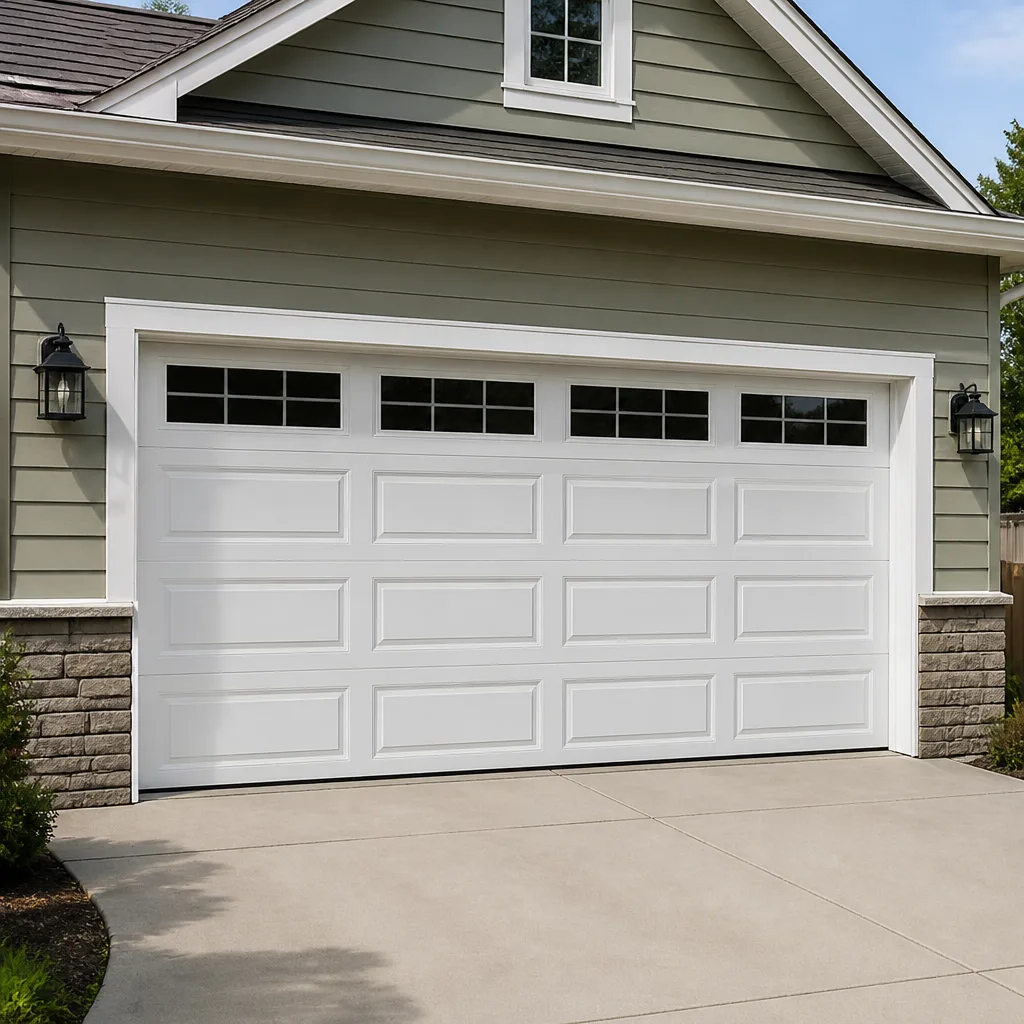 Raised-panel steel
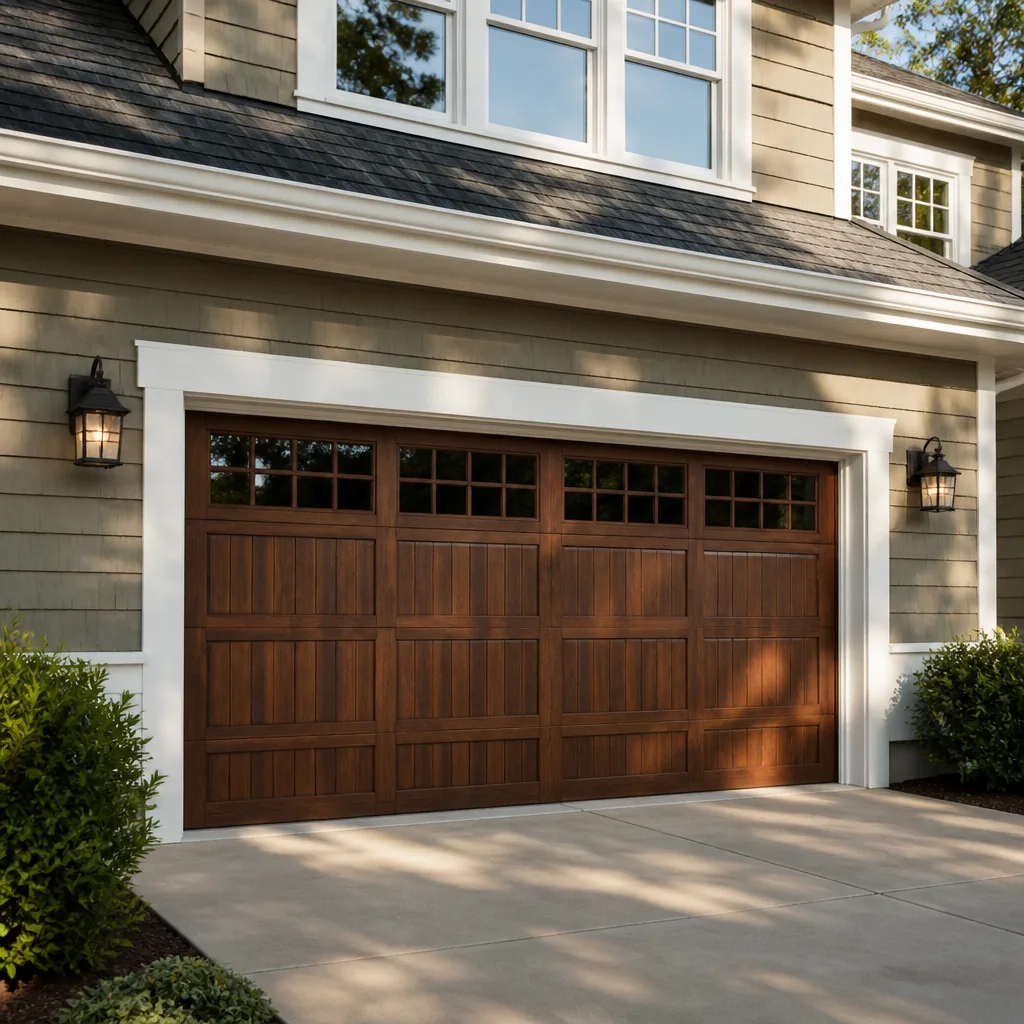
 Carriage house
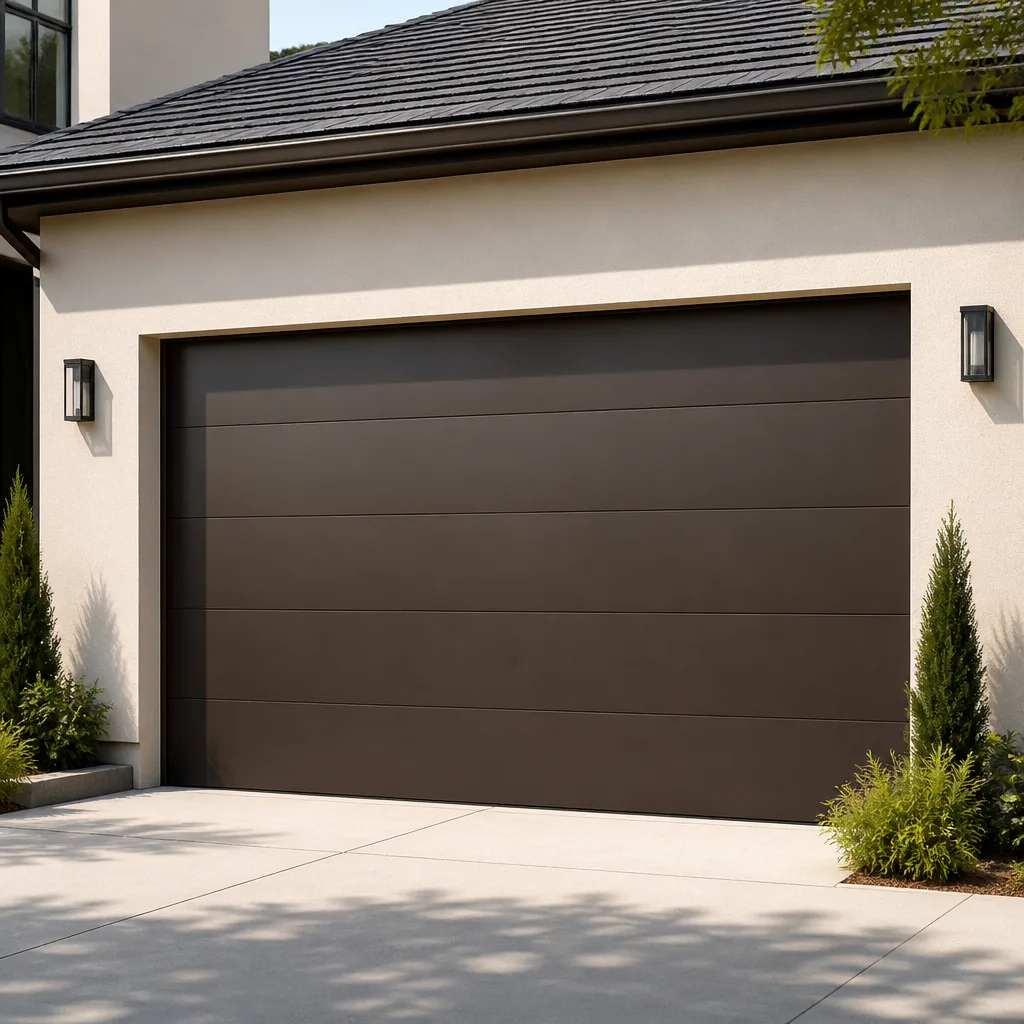 Modern flush
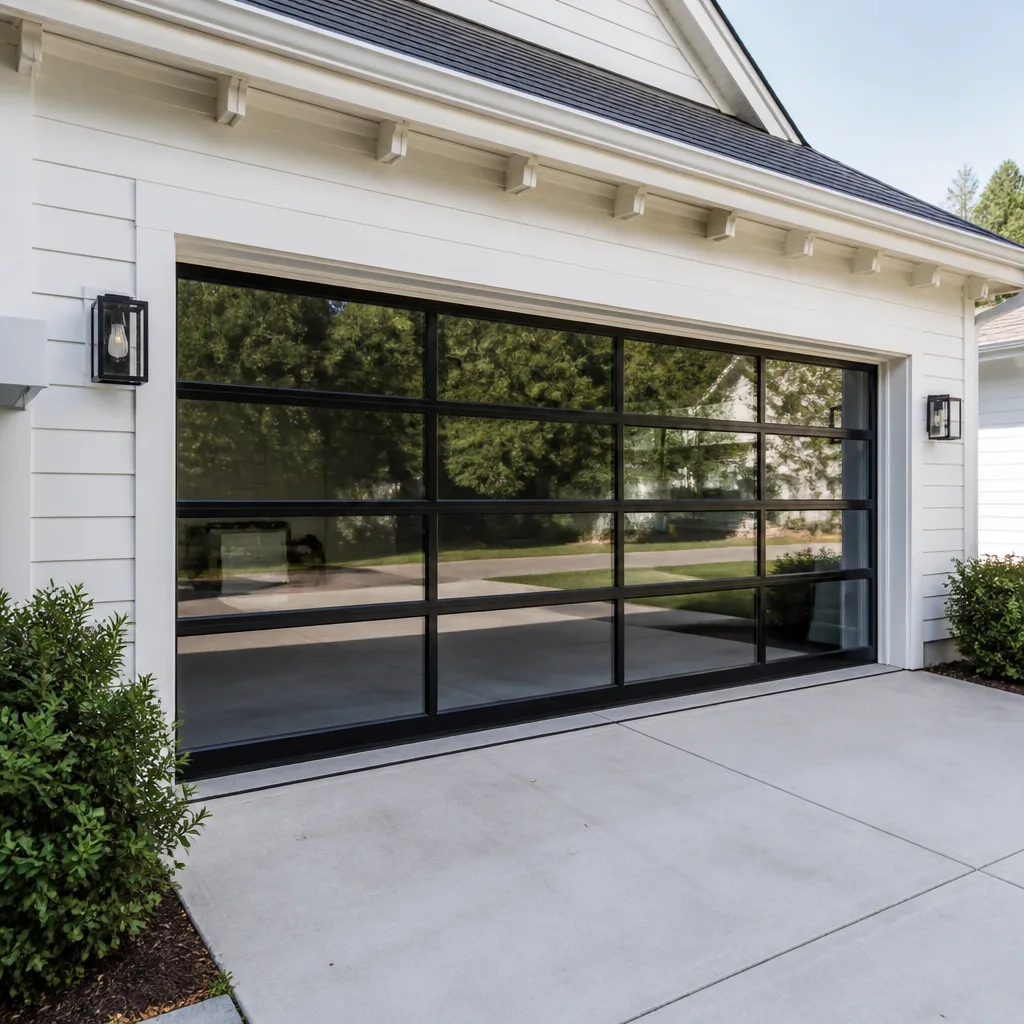 Full-view glass
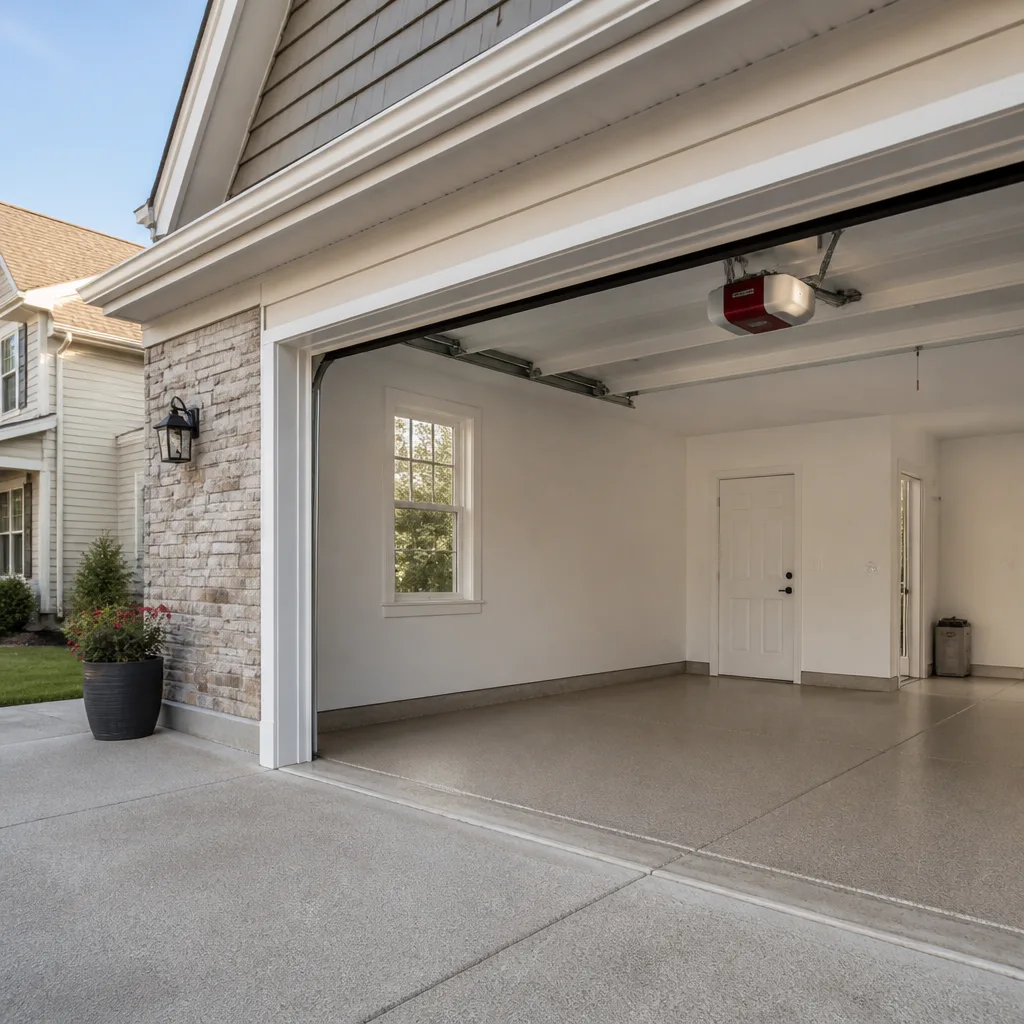 LiftMaster openers
 Chamberlain openers
Full 25-point door and opener safety check with every visit - springs, cables, rollers, tracks, and your LiftMaster or Chamberlain opener included
You get a price before we start. It does not change when the pro arrives.
Get your free estimateHow to Hire a Garage Door Contractor in Carmel: A Step-by-Step Guide
A garage door contractor who can’t tell you whether your door runs on torsion or extension springs before writing a quote has already answered your most important question. Anyone who does this work regularly reads the hardware in about a minute: the winding bar position, the shaft across the header, the way the cable wraps the drum. A generalist who shows up cold and quotes a lump sum is guessing, and springs, cables and openers are not forgiving places to guess. This guide covers the five technical questions to ask, how Indiana licensing and insurance actually work, the red flags that are specific to garage doors, and the warranty chain nobody explains. It’s written for Carmel homeowners who want the fix done right the first time.
Quick Answer
Hire a garage door contractor in Carmel by asking five specific technical questions before you accept any quote: spring type and cycle rating, opener model compatibility, cable gauge, track radius for your door height, and whether the warranty covers parts, labor, or both. Verify general liability and workers compensation coverage in writing, insist on a site visit before pricing, and confirm the technician will test the opener’s safety reversal after any install. Price matters, but in this trade the wrong installer costs more than the right one.
Styles & brands we work with
- Raised-panel steel
- Carriage house
- Modern flush
- Full-view glass
- LiftMaster openers
- Chamberlain openers
Table of Contents
- The Five Technical Questions to Ask Before Accepting Any Quote
- Licensing and Insurance in Indiana: What to Request and Verify
- Red Flags Specific to the Garage Door Trade
- How to Read Reviews for Garage Door Contractors
- The Warranty Chain: Parts, Labor, and Why It Matters
- What a Proper Site Visit Looks Like
- Step-by-Step: A Hiring Checklist for Carmel Homeowners
- Repair or Replace? How a Specialist Decides
The Five Technical Questions to Ask Before Accepting Any Quote
These five questions take about three minutes to ask and they separate a brand-fluent specialist from a low-bid operator faster than any review you’ll read. The answers also tell you exactly what’s going on with your door, which is useful whether or not you hire the person on the phone.
- What spring type do I have, and what cycle rating will the replacement carry? Torsion springs mount on a shaft above the door; extension springs run along the horizontal tracks on either side. They’re replaced differently, tensioned differently, and priced differently. Cycle rating is how many open-and-close cycles a spring is designed for. Ask for the number so you’re comparing like with like.
- How will you check opener model compatibility? A new opener has to match the door’s weight, the existing rail and mounting, and the safety sensors. A LiftMaster or Chamberlain unit sizes differently than a Genie in a few respects. A tech who says “it’ll be fine” without looking up the model is skipping a step.
- What cable gauge are you using? Cables are sized in thousandths of an inch. Too thin and they fray under load; too thick and the door balances poorly. A specialist will tell you the gauge and why it fits your door’s weight.
- What track radius fits my door height? Low-headroom doors use a different radius track than a standard seven-foot door. If your garage has a beam or a low ceiling, radius matters and the quote should reflect it.
- Does the warranty cover parts, labor, or both? A five-year parts warranty means nothing if labor is billed separately three months from now. Ask which is which before you sign.
In our experience, a specialist answers all five without reaching for a smartphone. That’s the first signal you’re talking to the right person. For doors showing visible damage, the same technician is often the one you’d call for garage door repair, so the answers carry over.
Licensing and Insurance in Indiana: What to Request and Verify
Indiana structures contractor licensing by trade and by scope of work, and garage door service typically falls under general contractor or home improvement rules rather than a dedicated license class. That means “licensed” by itself doesn’t tell you much. What tells you something is whether the contractor can hand you a general liability certificate and a workers compensation certificate before work starts, and whether those certificates actually match the name on the quote.
Here’s what to ask for:
- General liability (GL) certificate. This covers damage to your property if something goes wrong: a dropped door section, a scratched vehicle, a cracked panel. Request the certificate itself, not a verbal promise, and check that the address and business name match the quote.
- Workers compensation certificate. If a technician is injured at your Carmel home and the contractor doesn’t carry workers comp, the claim can land on your homeowner’s policy. This is the document people forget to ask for.
- Business registration. Indiana businesses register with the Secretary of State. A quick check confirms the business exists and confirms who’s behind the name.
- Written estimate on company paperwork. Branded, dated, itemized. A text message with a dollar figure isn’t a quote.
Ask for these before scheduling and again at the door if the technician is new to you. Legitimate contractors keep certificates on hand and don’t get defensive when asked. If you’re comparing contractors who all pass the insurance check, the tiebreaker comes down to brand familiarity, and that’s a different kind of question to ask. For any project that includes replacing the door itself, it’s also worth asking whether they pull permits, since many Indiana municipalities require one for a structural change. Ask your city’s building department directly about the permit rule for your address.
Red Flags Specific to the Garage Door Trade
Garage door work has its own category of shortcuts, and they look different from shortcuts in roofing or plumbing. Watch for these:
- A quote given without a site visit or photos. Springs, openers and tracks are sized to the specific door. A quote over the phone without any look at the hardware is a guess dressed up as a price.
- Springs replaced without balancing the door afterward. A balanced door stays put when stopped halfway. If the tech winds new springs and doesn’t run the balance test, the springs are stressed, the opener is overloaded, and you’re back on the phone in six months.
- Opener installs without a safety reversal test. Every opener sold in the US has a reversal function for a reason. A responsible installer runs the test with you watching, using a test object or by holding the bottom edge.
- Quoted as “one spring” when the door has a matched pair. Springs are usually replaced as a pair because they wear together. One spring priced where two are needed is a low-bid trap.
- Cables or drums swapped without mentioning the tensioning step. Cables carry the door’s full weight. Replacement without a proper re-tension is a hazard, not a saving.
- Upsell to a proprietary opener that only that contractor services. A specialist works on the brand already in your garage: LiftMaster, Chamberlain, Genie, Craftsman, and the rest. If they’re pushing you off a working system, it’s a sales tactic.
- No written estimate, or an estimate that changes after work starts. The price you’re quoted should be agreed before anyone touches the door.
Carmel’s mix of older established neighborhoods and newer builds means both torsion and extension setups are common, and openers from all the major brands appear in the same block. A contractor who works on whatever’s already there is the safer bet than one pushing a single house line.
How to Read Reviews for Garage Door Contractors
“Fast and professional” is the most common review phrase in home services, and it’s nearly useless for choosing a garage door contractor. Almost every five-star review says something like it, because most of them are written right after the visit and before any problem would show up. What separates helpful reviews from filler is specificity.
Look for reviews that mention:
- Brand names. “They fixed my Chamberlain opener” tells you the tech knew the unit. “They fixed my opener” tells you almost nothing.
- Part names. “Torsion spring replaced” or “cable replacement” or “balancing” shows the reviewer watched the work and remembers what happened.
- Warranty outcomes. Reviews written weeks or months after the visit that mention the part or the callback are gold. They tell you the contractor actually stands behind the work.
- The diagnosis. “They told me it was just the safety sensor, not the opener” is a signal of honest diagnosis. “They gave me a great deal on a new door” is a signal of something else.
Then do the cross-check. Read the worst reviews with a cooler head: was the complaint about a genuine mistake, or about a price the customer misunderstood? A company with a handful of mixed reviews and detailed responses is often more trustworthy than a wall of identical five-stars. And look for local context. If the reviewer mentions the specific Carmel neighborhood or a recognizable local landmark, that’s a real customer.
The Warranty Chain: Parts, Labor, and Why It Matters
Garage door warranties come in layers, and the installer is the layer most people miss. Understanding how those layers stack is what keeps a “covered” repair from costing you money the second time.
- Manufacturer parts warranty. The door maker or opener manufacturer warrants the part itself, usually for a set window from the original purchase. Clopay, Wayne Dalton and Amarr all warrant their doors on terms that vary by model line, and the warranty usually requires installation by a qualified professional to remain valid. This is why the installer’s brand familiarity matters: an unauthorized installation can void coverage.
- Installer labor warranty. This is the company’s own promise that the installation was done right and will stay right for some period. Read it. Some labor warranties cover callbacks; others cover only the original install visit.
- Dealer-stocked aftermarket parts. A spring or cable replaced with a non-OEM part may not carry the door manufacturer’s warranty at all. It will carry the installer’s warranty, if the installer offers one. Ask which part they’re installing and whose warranty it falls under.
For Raynor and LiftMaster installations, the brand-level warranty chain is usually clean as long as the installer is authorized and the parts are OEM. For a Wayne Dalton door with a non-OEM replacement spring, you may have to rely on the installer’s labor warranty entirely. That’s not a problem, but you should know it before the part is on the door. The best contractors spell out the chain in the written estimate.
What a Proper Site Visit Looks Like
A site visit from a reputable garage door contractor takes 20 to 40 minutes. It’s not a sales call, and it’s not a five-minute photo session. Here’s what a good one involves:
- Door weight and balance check. The tech disconnects the opener and lifts the door manually to feel the balance and confirm the spring system is carrying the load properly.
- Spring inspection. Both springs are photographed and measured. The tech notes the wire gauge, the length, and the number of coils, which determines the replacement spring’s rated cycle life.
- Cable and drum inspection. The cables are inspected for fraying, especially at the drum attachment points, and the drum is checked for wear.
- Opener inspection. The opener is checked for drive type (chain, belt, screw, or wall-mount), age, and sensor function. The safety reversal is tested on the spot.
- Track and roller inspection. Track bends, roller wear, and hinge condition are noted. These are the parts that cause sagging and binding.
- Written estimate with line items. Each repair is listed separately with parts and labor, along with the warranty terms on each.
If a contractor asks for photos over text and quotes without stopping by, you’ve learned something. Real diagnosis needs eyes on the door. For opener-specific issues, the site visit doubles as a garage door opener repair assessment, since sensors, logic boards and drive gears can all mimic a dead opener until someone actually tests them.
Step-by-Step: A Hiring Checklist for Carmel Homeowners
Run this checklist in order, and don’t skip ahead. The steps are arranged so each one either confirms the contractor is legitimate or reveals something useful before you’ve paid a deposit.
- Gather the brand and model information. Find the sticker on the opener (usually on the back panel or under the light cover) and any label on the door itself. Note the brand: LiftMaster, Chamberlain, Genie, Craftsman, Clopay, Amarr, Wayne Dalton, Raynor. This is your first question filter.
- Ask the five technical questions. Spring type and cycle rating, opener compatibility, cable gauge, track radius, warranty terms. If the contractor can’t answer them clearly, move on.
- Request insurance certificates. General liability and workers compensation, current and matching the name on the quote.
- Schedule the site visit. A real diagnosis needs the tech in the garage, not on the phone. Make sure you’re present or a trusted adult is.
- Compare written estimates line by line. Parts, labor, warranty on each, and total. Estimates are estimates; the final price should be agreed in writing before work begins.
- Ask about permit requirements. For a full door replacement, check with the city about permits. For repair work, ask the contractor directly whether a permit is needed for your job.
- Confirm the safety test is part of the job. Any opener install or adjust includes a safety reversal test. Don’t accept the work without it.
- Get the terms in writing before work starts. Parts, labor, warranty, schedule, payment. If any of it is verbal, write it down and ask the contractor to confirm.
If you’re planning a new door for next season, the hiring process has a longer runway: measure, order, install. That’s a different conversation than a repair, and it’s why a proper garage door installation consultation happens well before the installation day. Our technicians have up to 9 years of experience across those brand lines, and we can quote both repair and replacement from the same visit.
Repair or Replace? How a Specialist Decides
The honest answer is that repair usually wins, and replacement usually wins only when the structure has gone. A specialist looks at four things before recommending a new door:
- Panel integrity. Dents are cosmetic. Cracks that run through the panel, or a bottom section with water damage, are structural. Clopay and Amarr panels can often be replaced individually, so the whole door doesn’t have to go.
- Spring and cable condition. Springs are consumable parts. Cables that have stretched beyond spec are not, and the question becomes whether the drums and shafts are also past their window.
- Opener ecosystem. An older opener that doesn’t support modern safety sensors may be worth replacing even if the door is fine. This is where brand fluency matters. A LiftMaster or Chamberlain unit can be matched to the existing door weight and rail; a mismatched opener is a false saving.
- Overall alignment. Doors that are out of square, off track, or bent at the hinges may need structural repair before any other work. A specialist will tell you that on the visit rather than after the estimate.
Be wary of a contractor who recommends replacement on the first visit without checking whether the parts are serviceable. Springs, cables, rollers and hinges are all replaceable on almost any door. The repair-versus-replace call should follow the inspection, not precede it.
Common Mistakes to Avoid
- Accepting a quote without a site visit. Springs, cables and openers are sized to the specific door. Phone-only quotes are a guess, and the guess is often low to win the job.
- Skipping the insurance check. A contractor without workers comp coverage can put an injury claim on your homeowner’s policy. Ask for both certificates in writing.
- Assuming “licensed” is enough. Indiana doesn’t have a single garage-door-specific license class. The meaningful verification is insurance plus written scope, not a license number alone.
- Comparing only the bottom line. A low quote with aftermarket springs and a limited labor warranty isn’t the same as one with OEM parts and a written warranty. Compare the line items.
- Not asking whether springs will be replaced as a pair. The quote should say pair or single, and the answer should match how the door is built, not what keeps the price low.
- Letting the installer skip the safety reversal test. It takes thirty seconds and it’s the difference between an opener that stops on contact and one that doesn’t. Insist on it.
- Not reading the labor warranty. “Manufacturer warranty” and “installer warranty” are different things, and only one of them covers the human being who does the work.
- Ignoring permit requirements on a full replacement. Many Indiana cities require a permit for a structural change. Call the city’s building department before the door arrives.
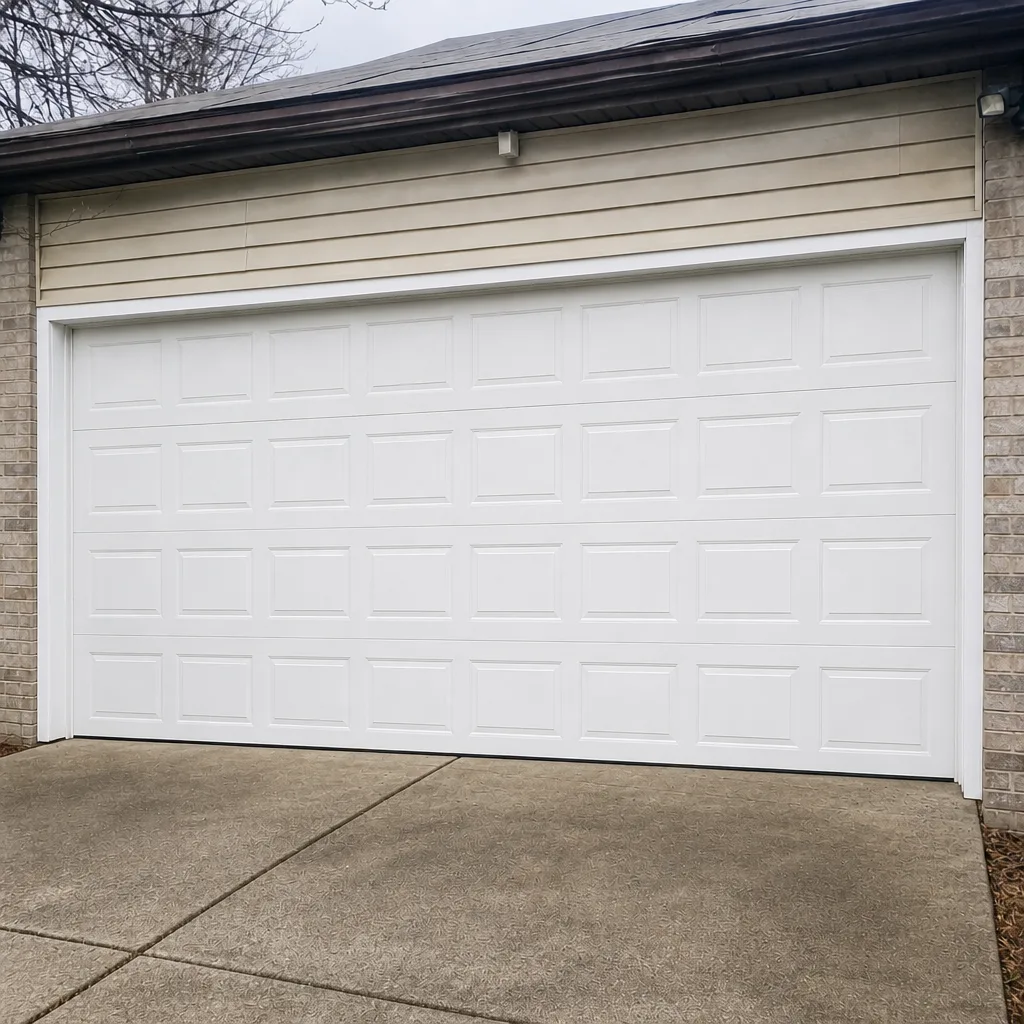
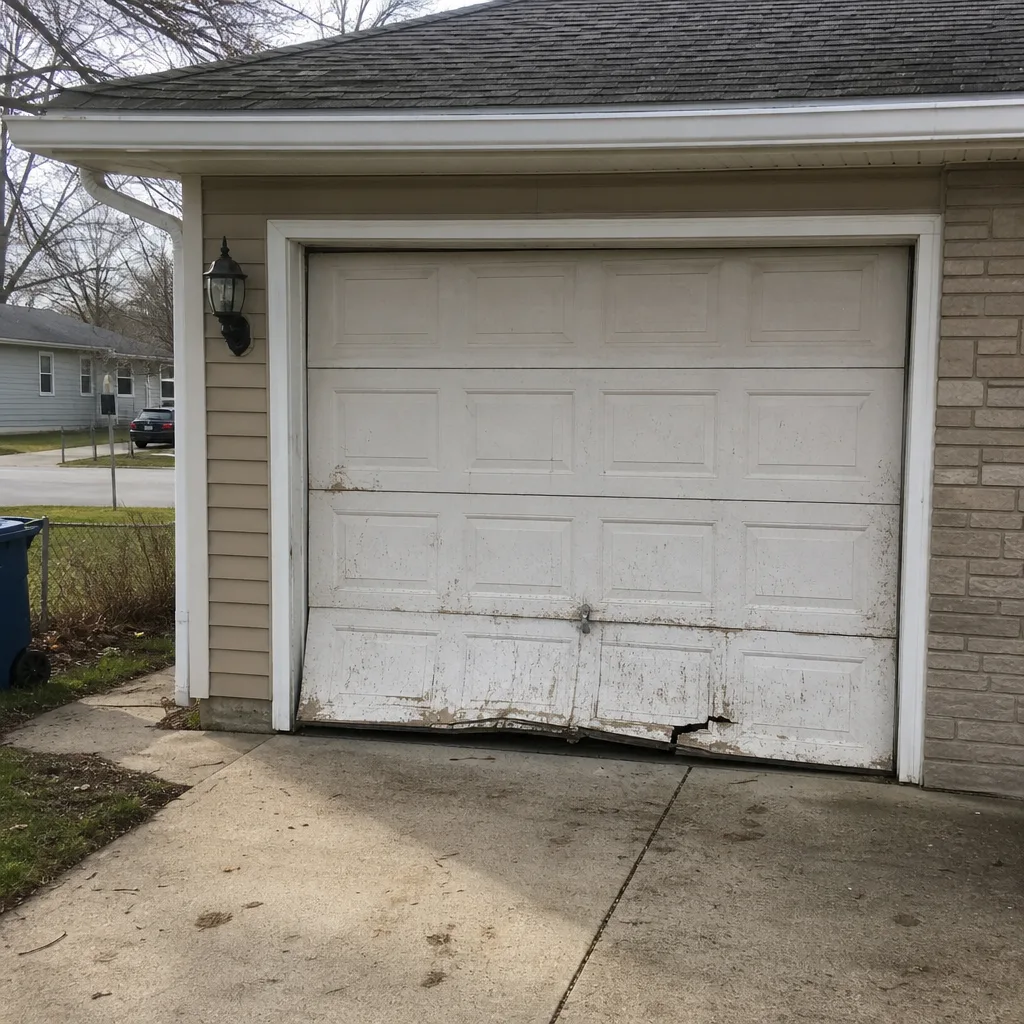
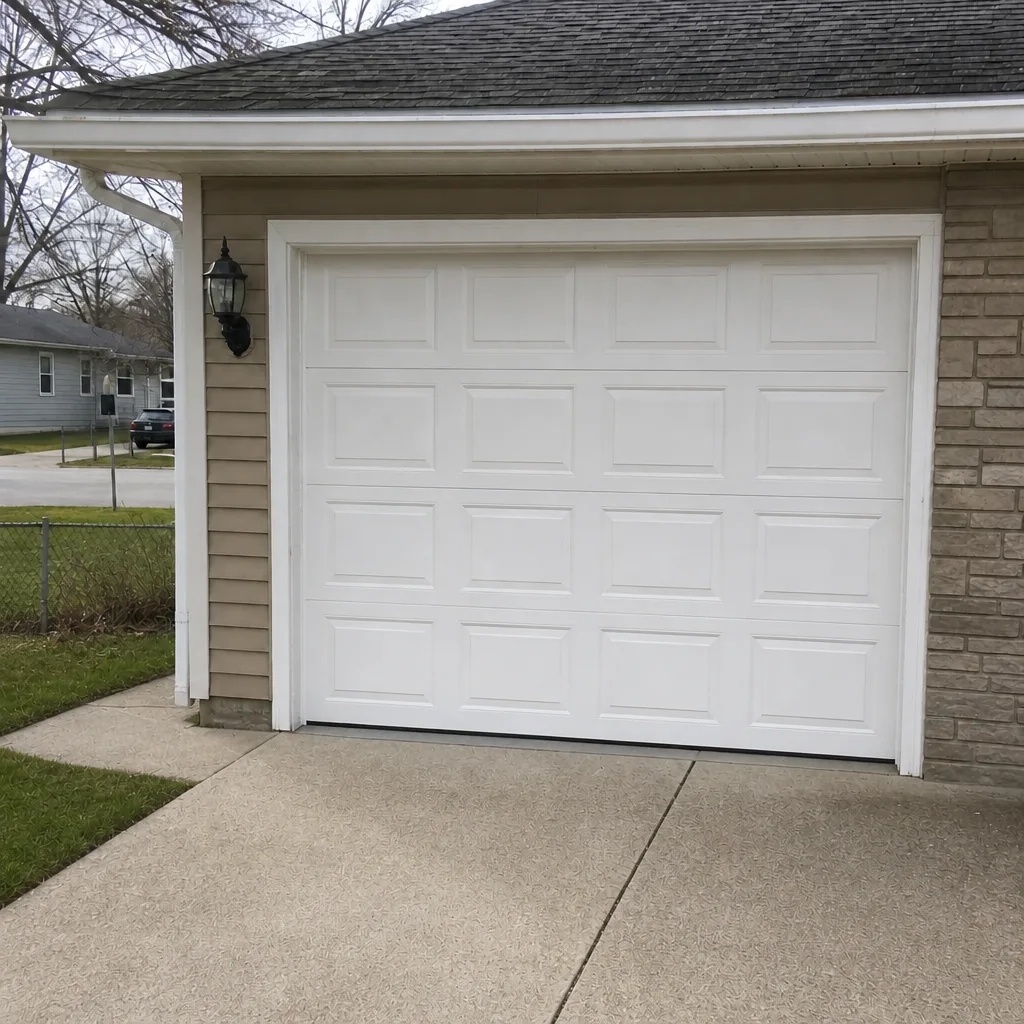
See the difference
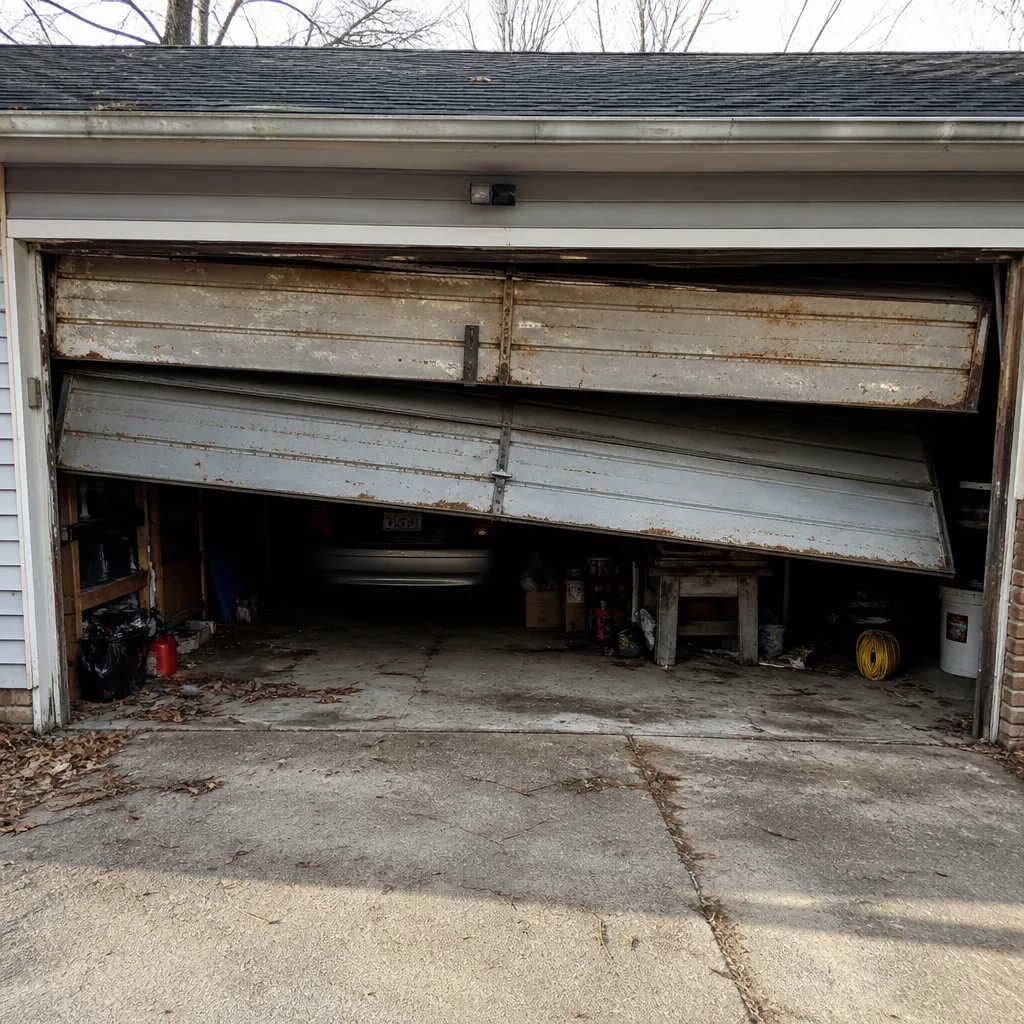 Before
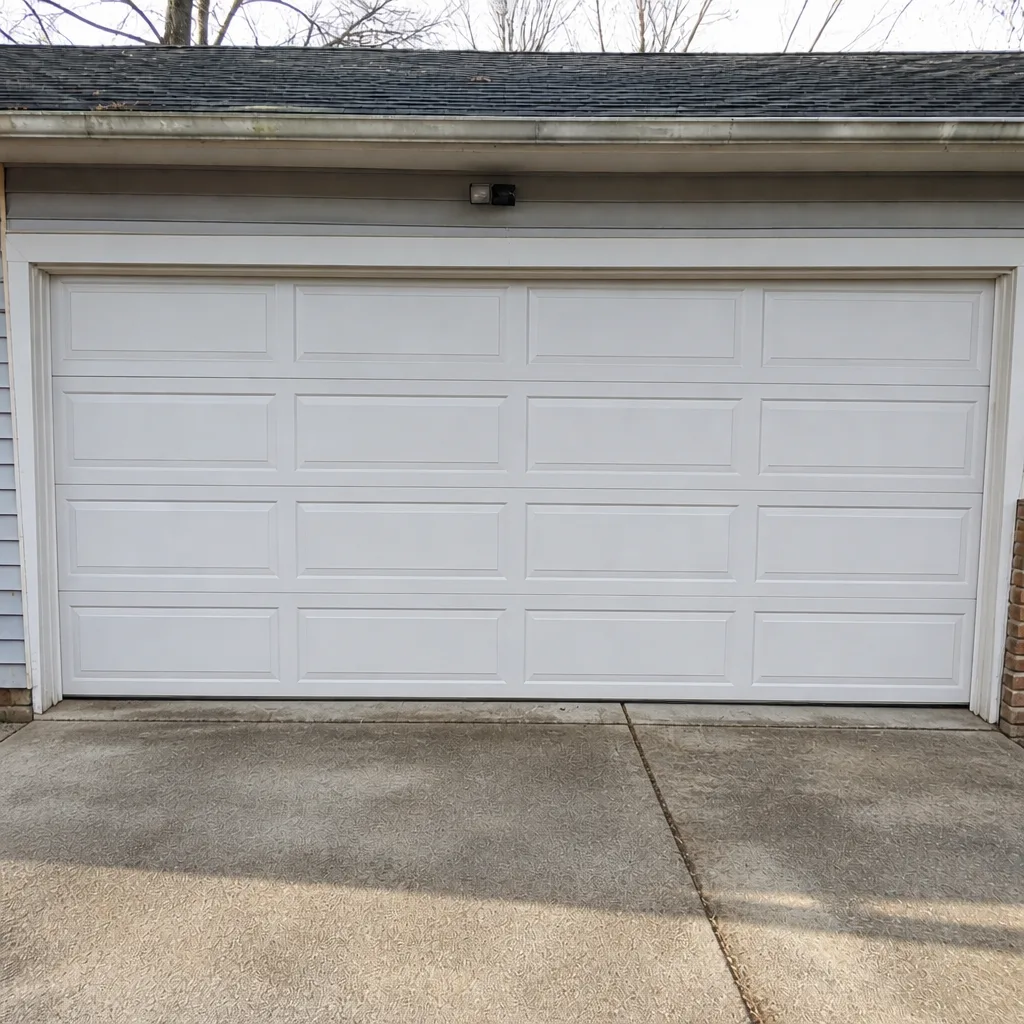 After
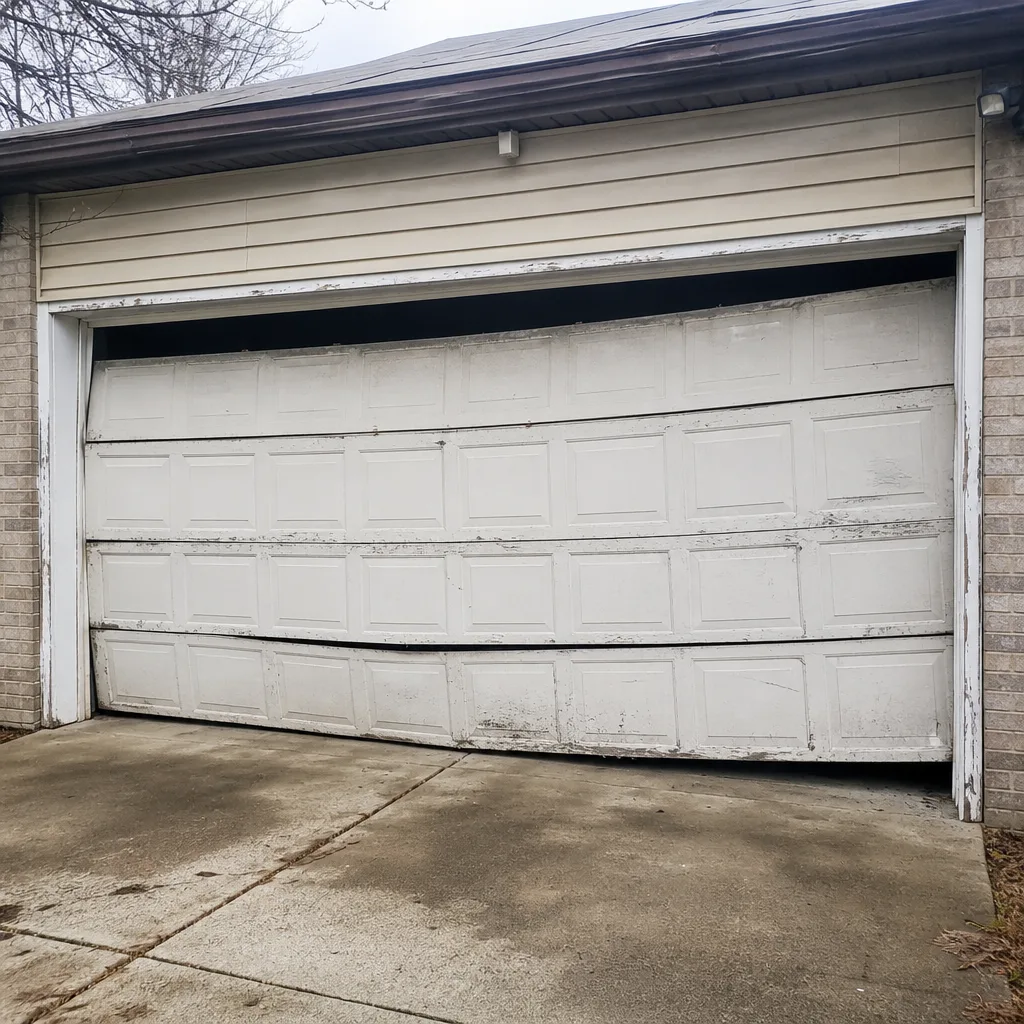 Before
 After
 Before
 After
When to Call a Professional
Some jobs are safe to watch and unwise to attempt. Call a professional for anything involving high-tension springs, cables under load, or a door that has come off its track. Those components store enough energy to cause serious injury, and they don’t need a “hold my beer” moment. Call for an opener that trips the breaker repeatedly, a door that reverses or stops mid-travel, a broken or detached hinge, a bent track, or a door that’s visibly sagging from the center. Call for any garage door work in Carmel where the door won’t open or close at all and access or security is at stake: a door stuck open leaves the house exposed, and a door stuck closed can trap a car inside. Also call when a safety sensor won’t stay lit or when the opener’s reversal test fails, since those are the failures that lead to property damage or injury down the line.
Carmel Garage Door Repair Co offers free estimates in Carmel. The written price you agree to before work starts is the final price, and the local pro doing the work is licensed and insured as their state requires. Call (855) 904-1455 to schedule.
Frequently Asked Questions
Torsion springs mount on a horizontal shaft above the door, near the header. Extension springs run along the horizontal tracks on each side, stretched parallel to the door. If you can see a wound coil on a bar above the door, you have torsion springs. If you see two long springs running sideways along the tracks, they’re extension springs. Either way, don’t touch them to confirm: call a specialist and let the answer come from a trained eye.
Not a reliable one. Springs, cables, and openers are sized to the specific door, its weight, and its track configuration, so a quote without a look is a placeholder at best. A specialist needs to see the hardware, test the balance, and check the opener. Call (855) 904-1455 for a free estimate that’s based on an actual visit.
Ask for a current general liability certificate and a current workers compensation certificate, both in writing and both matching the business name on the quote. GL covers property damage during the job; workers comp covers a technician injured on your property. If either is missing or expired, find another contractor.
Spring pricing depends on the type and the door, and a matched pair is usually replaced together, so a pair costs about twice a single spring. Get a written estimate that itemizes the spring type, cycle rating, and labor, and confirm the door will be balanced afterward. Call (855) 904-1455 for an exact quote; estimates are free and the price you agree to before work starts is the price you pay.
Leave it alone and call a professional, especially if the door is hanging unevenly, off track, or making a loud bang before it failed. Those are signs a spring or cable has given way, and they’re not safe to handle without training. Emergency garage door service is available for exactly these situations, so call (855) 904-1455 and we’ll get a trained technician out to look at it.
Many Indiana cities require a permit for a full door replacement, since it’s a structural change to the home. The rules vary by address and by scope, so call your city’s building department with the specifics of your job before the door is scheduled. A responsible contractor will know which questions to ask and will tell you the permit status in writing before work starts.
The Bottom Line
Hiring a garage door contractor in Carmel comes down to four filters: technical fluency, verified insurance, a site visit before pricing, and a written warranty chain that covers parts and labor. Ask the five questions, request both insurance certificates, watch the safety reversal test, and compare line items rather than totals. The right contractor answers the questions without hesitation and puts the terms in writing. The wrong one quotes low, replaces one spring when the door needs two, and leaves you calling again in a few months. Our role at Carmel Garage Door Repair Co is to be the first kind: we work on the brand already in your garage, we test what we install, and we tell you what your door actually needs. Call (855) 904-1455 for a free estimate in Carmel, and we’ll start with the questions above.
Written by the team at Carmel Garage Door Repair Co.