Last updated November 21, 2026
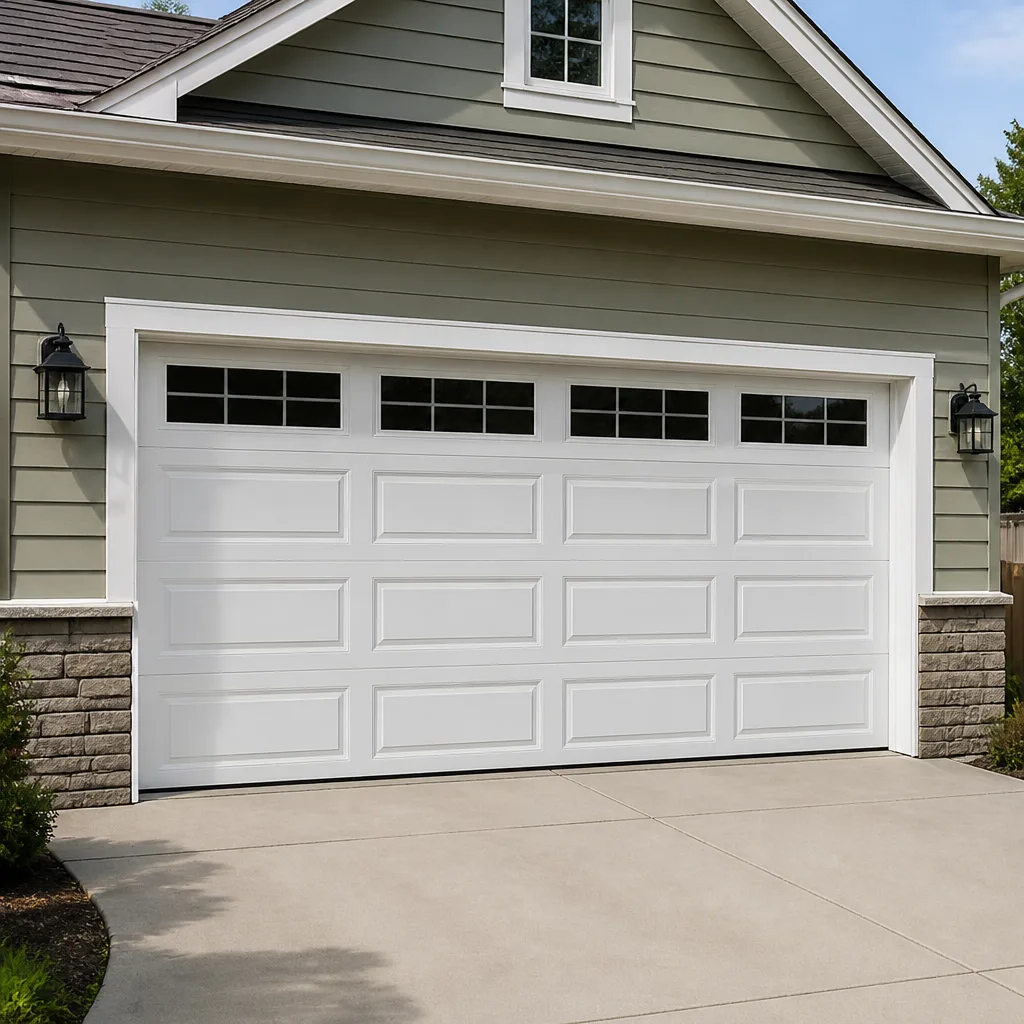 Raised-panel steel
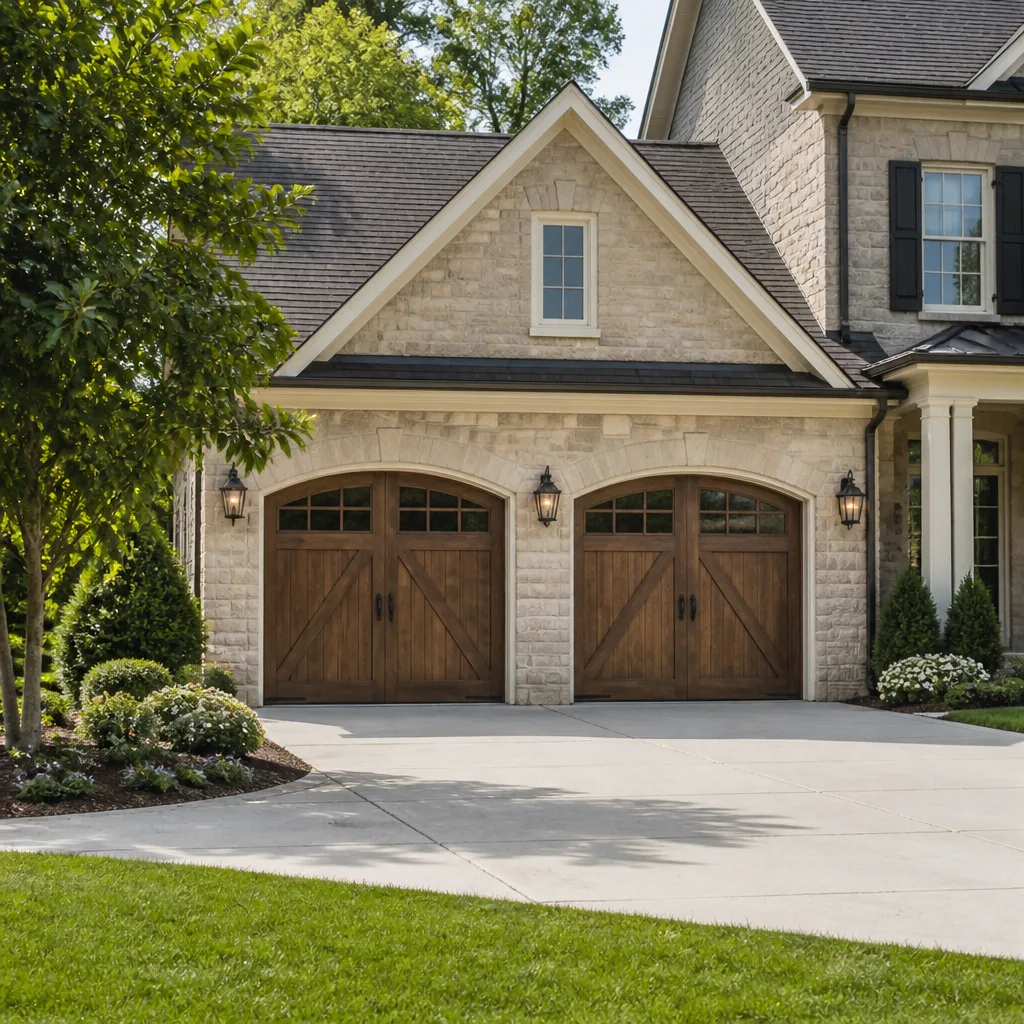 Carriage house
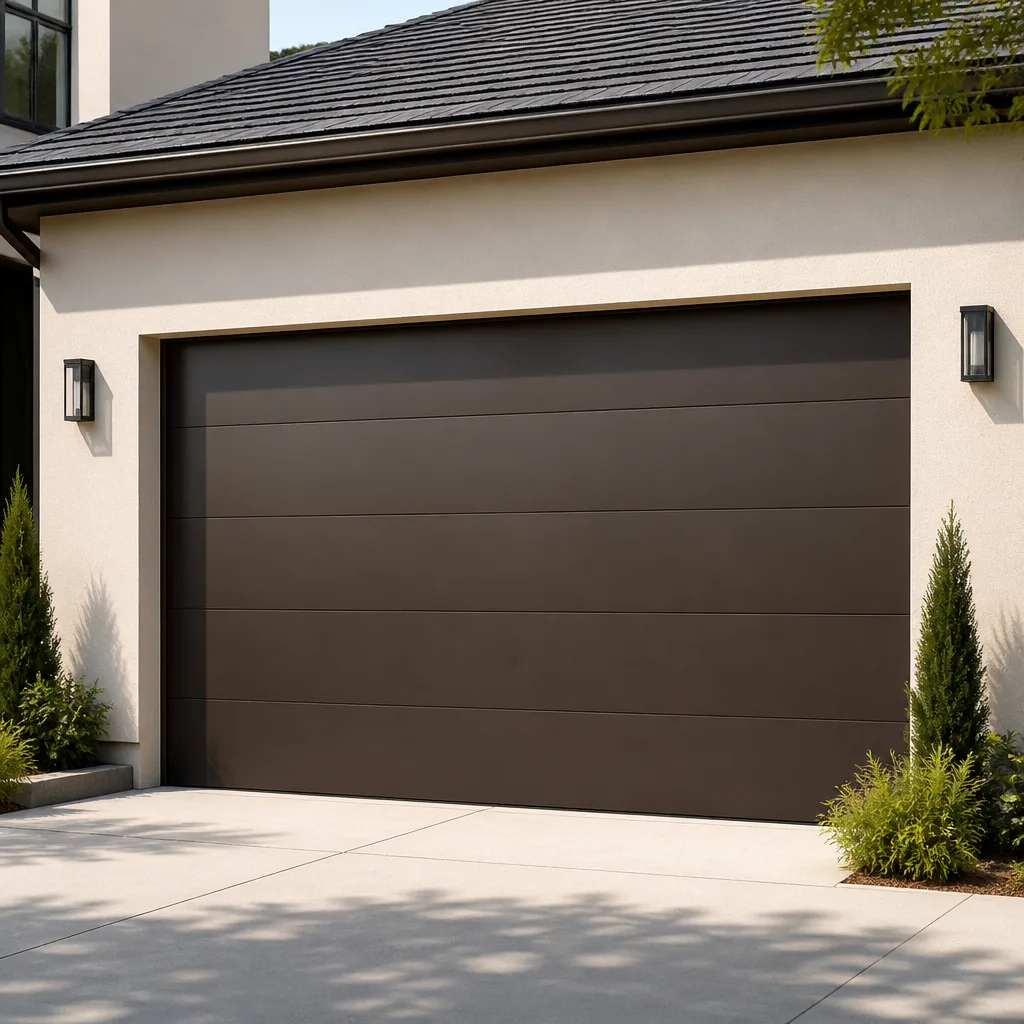 Modern flush
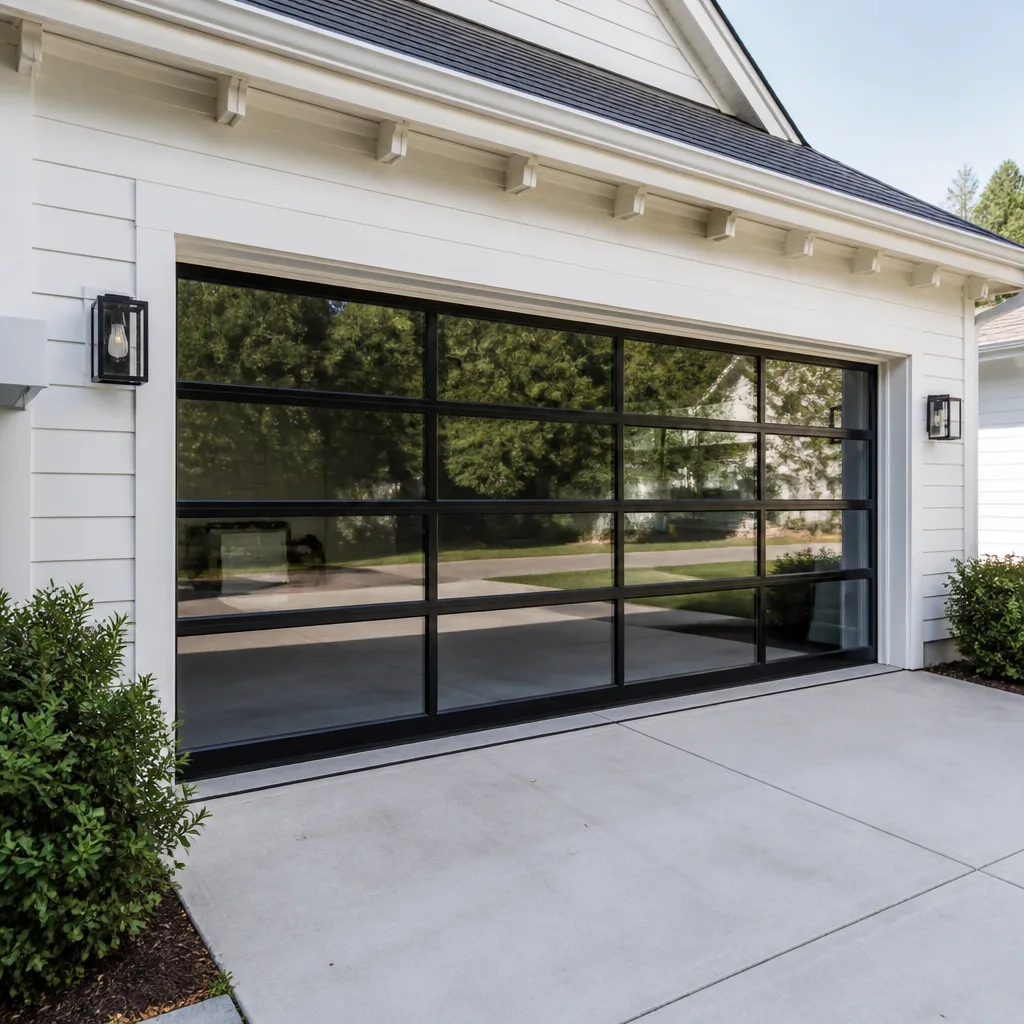 Full-view glass
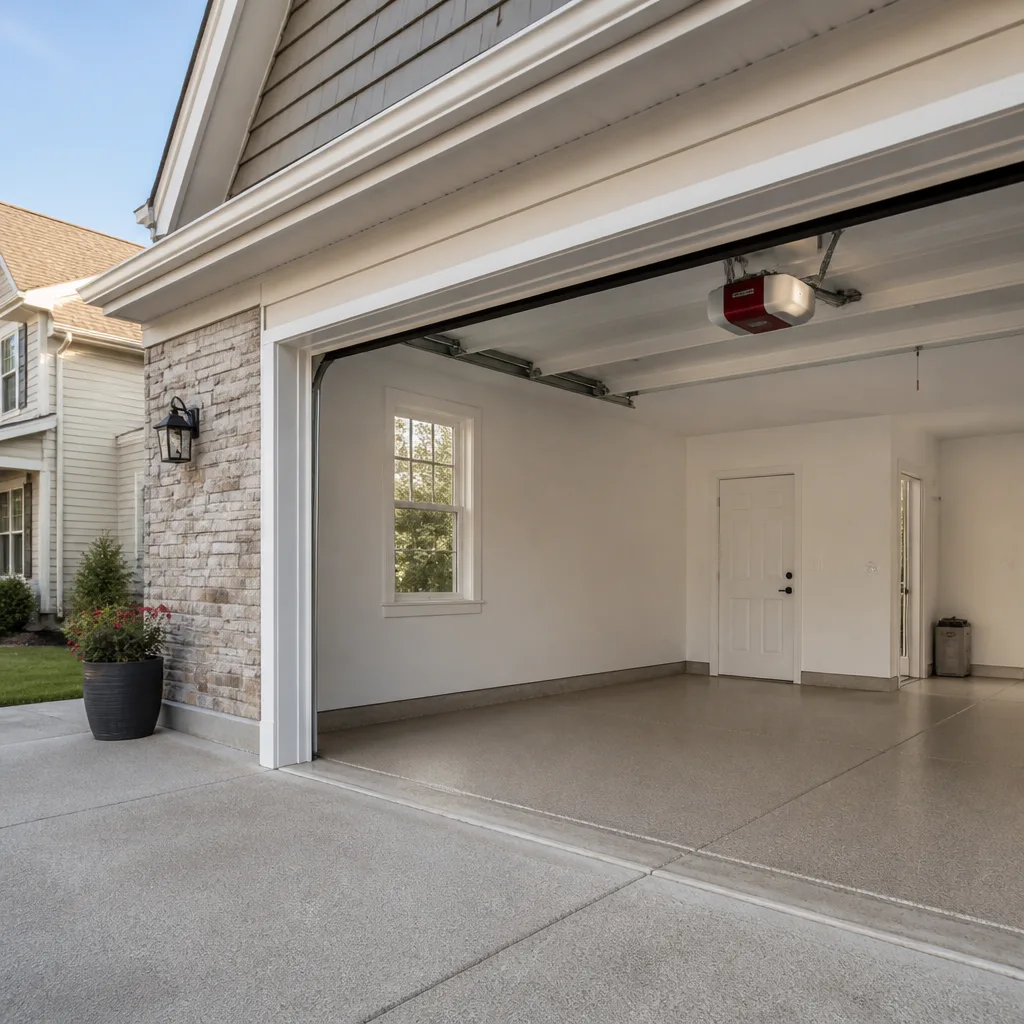 LiftMaster openers
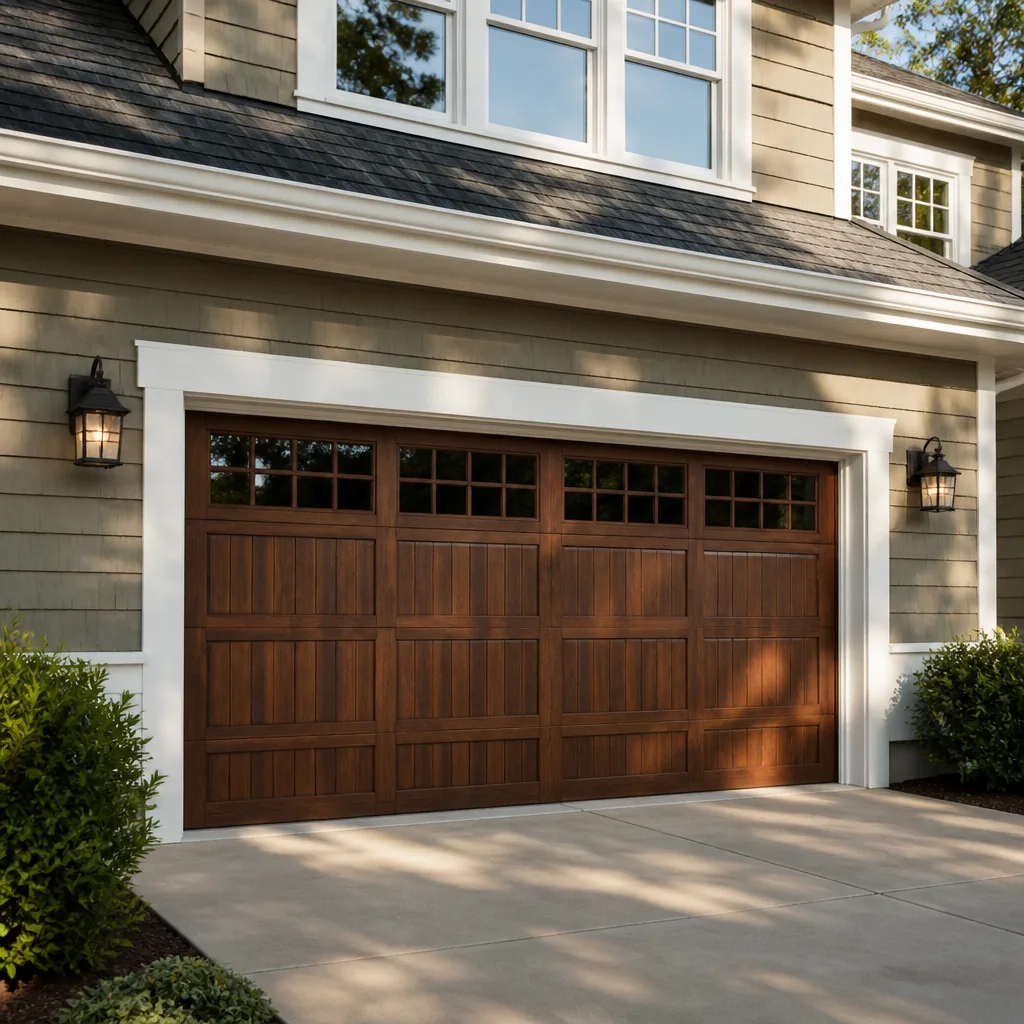 Chamberlain openers
Full 25-point door and opener safety check with every visit - springs, cables, rollers, tracks, and your LiftMaster or Chamberlain opener included
You get a price before we start. It does not change when the pro arrives.
Get your free estimateGarage Door Repair Troubleshooting in Carmel: Common Problems and How to Fix Them
A grinding noise on the way up and a bang on the way down are two completely different diagnoses. Most homeowners call both “the door is making a noise,” and that vague description makes it easy to pay for the wrong part. Your garage door is a small machine with a handful of moving components, and each failure leaves a distinct signature – a sound, a door position, a behavior at the opener head. This guide teaches you to read those signatures so you can name the actual problem before anyone quotes you a repair in Carmel. You’ll learn the manual release test every homeowner should run first, which symptoms are safe to inspect, and which mean keep your hands off and call.
Quick Answer
The most common garage door problems in Carmel come down to three areas: a broken or worn torsion spring (usually a loud bang, then a door that won’t lift), worn rollers or bearings (grinding, scraping, or rattling during travel), and an opener that’s failing separately from the door itself (door works by hand but not by remote). The single fastest way to sort these three apart is the manual release test: pull the red emergency cord, work the door by hand, and watch what it does. If it lifts smoothly, your problem lives in the opener. If it feels heavy or won’t lift at all, you’re looking at a spring or cable issue – and that’s a hands-off call to a specialist.
Styles & brands we work with
- Raised-panel steel
- Carriage house
- Modern flush
- Full-view glass
- LiftMaster openers
- Chamberlain openers
Table of Contents
- Why symptom patterns beat vague descriptions
- Sound-to-component map: grinding, popping, scraping
- The manual release test every homeowner should run first
- Is it the opener or the door hardware? How to tell
- Brand-specific quirks: wall-mount versus chain-drive
- Safe to check yourself versus immediate hands-off
- What troubleshooting and repairs typically cost in Carmel
- Common mistakes to avoid
Why Symptom Patterns Beat Vague Descriptions
When someone says “my garage door is broken,” that could mean forty different things. When someone says “it pops once at the start of travel and then runs fine,” that narrows it to a handful. The difference matters because a technician who knows the pattern brings the right parts and diagnosis the first time, and a technician working from a vague description starts guessing. Guessing is where unnecessary replacement gets sold.
Garage doors fail in patterns because the components fail in a fixed order. Springs take the most load and fail first. Rollers and hinges wear next. Openers outlast both but go last, usually a gear, a logic board, or a travel limit. Read the pattern and you almost always land on the right component.
Around Carmel, the seasonal swing does its part. Summers run humid and warm, which softens wood and swells door panels a touch, adding load on the opener and rollers. Winters bring hard freezes that stiffen lubricant and shrink gaps, so a door that ran fine in October starts binding in January. Each season surfaces slightly different complaints, which is why being specific about what yours is doing in the moment matters.
Three questions to answer before you call anyone:
- What exactly does it sound like, and when during the cycle does the sound happen?
- Does it happen on the way up, the way down, or both?
- Does the door still move by hand with the opener disconnected?
Answer those three and you’ve skipped most of the diagnostic phase. If you’d like help interpreting what you found, our garage door repair team can walk through it.
Sound-to-Component Map: Grinding, Popping, Scraping
Every garage door noise points at a component. Here’s the map we use in the field:
- Grinding on the way up and the way down – usually the trolley carriage or the opener’s gear assembly. On chain-drive LiftMaster or Chamberlain units, a stripped drive gear makes a short grinding bark, then the door stalls. On belt-drives, grinding is more often a worn trolley or debris in the rail.
- A single loud pop, then the door won’t lift – almost always a broken torsion spring. The pop is the spring letting go. Stop and call; do not keep running the opener.
- Scraping along one side – a misaligned track or a roller that’s popped out of its channel. It usually accompanies a slight wobble as the door rises.
- Rattling and banging during travel – worn nylon rollers or loose hinge plates. Genie and Craftsman openers often get blamed for this when the door hardware is the real source.
- A short “zip” or buzzing from the opener with no movement – the motor runs but the door doesn’t move, which points at the gear, the logic board, or a stripped trolley.
- Squealing or squeaking – dry rollers, dry hinges, or dry torsion bar bearings. Often the cheapest fix on the list.
The pattern is the whole story. A grinding sound that only appears on the way down usually means the door is being driven into resistance – a misaligned track, a warped panel, or a travel limit set too far. A grind on both directions points at the opener itself. Same complaint word, different component, different repair.
One more note for Carmel homeowners with older wood doors: wood panels that have absorbed summer humidity sometimes swell enough to scrape the frame or the weather seal. That scraping sounds structural but is often seasonal. If it clears up when the weather dries, you’re looking at a door panel issue, not a track or opener problem.
The Manual Release Test Every Homeowner Should Run First
This is the single most useful diagnostic step in the whole trade, and it takes about thirty seconds. The manual release cord is the red handle hanging from the opener trolley. Pulling it disconnects the opener from the door so you can move the door by hand. What the door does next tells you which half of your system is broken.
Here’s the sequence:
- Close the door fully and make sure no one is underneath.
- Pull the red release cord straight down. You’ll feel the trolley click free.
- Grip the door’s bottom edge and lift slowly. Don’t force it.
- Watch for: heavy resistance, uneven lifting (one side rises faster), a stop mid-travel, or no movement at all.
- When done, re-engage the trolley by pushing it back toward the door and letting the opener cycle once.
What the result means:
- Door lifts easily by hand – your door hardware is fine, and the problem lives in the opener. That’s an opener repair call, and usually a less expensive one. Check our garage door opener repair page for what that usually involves.
- Door feels heavy or won’t lift – spring or cable problem. Stop here. Do not force it. Springs are under extreme tension and can cause serious injury if tampered with. Call a specialist.
- Door lifts unevenly or binds on one side – track, roller, or cable issue. Do not force it; uneven lifting puts stress on the panel and the opener alike.
- Door drops freely when you release it – the counterbalance has failed. That’s a spring call, and it means the door is unsafe to operate until it’s fixed.
Run this test before you call anyone. When you call, tell the technician what the door did by hand. That one piece of information often saves a whole diagnostic visit.
Is It the Opener or the Door Hardware? How to Tell
Most homeowners assume the opener is failing when the door stops moving. In our experience, the opener gets blamed far more often than it fails. The manual release test above settles the question quickly, but a few other signals separate the two:
Tells that point at the door hardware:
- The door runs fine by hand but not with the opener.
- The sound comes from the door, not the opener head. Grinding or scraping from the panels or tracks is hardware.
- The door runs a little, then stops hard. That’s resistance, not a dead motor.
- A visible gap or misalignment in a track or hinge.
Tells that point at the opener:
- You hear the motor run but the door doesn’t move. That’s a stripped gear or a broken trolley.
- Nothing happens at all when you press the remote. Check the wall button first: if the wall button works and the remote doesn’t, that’s a remote or logic-board issue, not a dead opener.
- The opener runs a few seconds and reverses. That’s usually a safety sensor or a travel limit, not the door.
- Lights blink in a pattern. On LiftMaster, Chamberlain, and Craftsman units, a blinking LED usually means an obstruction or sensor alignment issue, which is often a quick fix.
When in doubt, check the wall button against the remote and pull the emergency cord. Those two tests settle most calls before a technician arrives. If it does turn out to be an opener, our specialty here is understanding the full range of smart, belt-drive, chain-drive, and wall-mount units across the major consumer and professional brands – including LiftMaster, Chamberlain, Genie, Craftsman, and others – so you won’t pay for a whole new system when a gear or board will do.
Brand-Specific Quirks: Wall-Mount versus Chain-Drive
Garage door openers share a lot of parts but not all of their failure behavior. A LiftMaster 8500 wall-mount, for example, handles a broken spring very differently from a traditional chain-drive unit sitting on the ceiling.
Here’s the difference. A standard chain-drive LiftMaster or Chamberlain unit couples to the door through a trolley and rail on the ceiling. When a spring lets go, the door sags, the trolley takes the strain, and the opener often struggles or stalls against the weight. You’ll usually hear the opener strain, then stop.
A wall-mount unit like the LiftMaster 8500 lives on the side of the door and drives the torsion bar directly through a jackshaft. When a spring breaks on a wall-mount system, the door often drops hard and the opener may not register the failure at all – it just stops, sometimes without any warning tone. That’s why wall-mount systems rely so heavily on proper travel limits and safety sensors. It’s also why a wall-mount door that stops suddenly needs a spring check first, not an opener replacement.
Other brand-specific patterns worth knowing:
- Genie units often show a gear or circuit board failure before the motor gives out. A grinding or buzzing with no movement usually points at the internal drive gear.
- Chamberlain systems tie into MyQ smart-home functions, so an opener that stops responding to the app but works from the wall button is usually a network or logic issue, not a mechanical one.
- Craftsman openers share a lot of architecture with Chamberlain, so the same gear and board issues surface.
- Clopay doors pair with most brands of opener, but panel weight and insulation vary by model, which affects how much lift force the opener needs to be set for.
Knowing the brand matters because a technician working on the brand already in your garage skips the trial-and-error. We work on whatever’s installed – LiftMaster, Chamberlain, Genie, Clopay, Amarr, Wayne Dalton, Craftsman, and Raynor – rather than steering you toward a proprietary system you don’t need.
Safe to Check Yourself versus Immediate Hands-Off
Some garage door problems are safe to inspect. Others are genuinely dangerous and need to be left alone. Knowing the difference is the most important thing in this entire guide.
Safe to look at yourself:
- Visual check of the tracks. If you can see the door binding or a roller popped out, that’s the issue.
- Roller and hinge lubrication. A dry hinge squeaking is a maintenance call you can handle with a spray lubricant.
- Safety sensor alignment. If the door reverses on the way down, check that both sensor lights are lit. Realign or clear debris from the lenses.
- Opener light blinking in a pattern. Look up the pattern for your brand; you may just be dealing with an obstruction.
- Wall button and remote checks. A dead battery or a mispaired remote is common.
Hands off – call immediately:
- Broken torsion spring. You’ll usually hear a loud bang and see a visible gap in the spring above the door. Springs are wound to hundreds of pounds of tension. Touching one without the right tool is a serious injury risk, so don’t.
- Cable off the drum. If a cable has jumped its drum or looks slack and tangled, it can snap under load. Stop operating the door.
- Door off one track or hanging unevenly. Forcing it can pull the door down off the other side, and that’s a thousand-dollar panel problem on top of whatever you started with.
- Door won’t lift by hand at all. That’s a spring failure, not a track issue. Leave it.
- Opener making an electrical smell or a burning odor. That’s a short in the motor or board. Shut off power at the breaker and call.
If you’re ever unsure which bucket you’re in, call. A specialist who can tell by ear whether a symptom is serious will save you a whole lot of grief. Our team at Carmel Garage Door Repair Co handles spring repair as a dedicated, named specialty because it’s the highest-risk, most technique-sensitive repair in the trade. It deserves its own call.
What Troubleshooting and Repairs Typically Cost in Carmel
Repair pricing in Carmel runs in a predictable band once the problem is identified. What you’re paying for mostly depends on which component failed and how far the failure has spread. These are typical ranges to expect and to compare against a quote – your written estimate is what sets the final price, and we always quote and agree on price before any work starts.
- Roller replacement (standard set) – $120 to $220 for the set, more for heavy-duty or nylon ball-bearing rollers.
- Hinge replacement (individual or full set) – $80 to $180, depending on count.
- Track realignment – $90 to $200 depending on how far out of alignment.
- Torsion spring (single spring) – $180 to $340. Note that matched pairs are almost always replaced together, so a pair runs about double that. If you’re replacing one spring, plan for both.
- Extension spring (single) – similar range per spring, with pair replacement the standard practice.
- Cable replacement – $150 to $280 per side, with pair replacement typical on older doors.
- Opener gear or logic board replacement – $150 to $350 depending on brand and part.
- Safety sensor replacement – $80 to $160.
- Full opener replacement – $350 to $650 for the unit plus installation, more for wall-mount or smart-home models.
- Full garage door replacement – a separate larger job, typically $900 to $2,500 depending on door size, material, and insulation.
A few things drive cost up or down in Carmel specifically. Older Carmel homes with original wood doors often need panel or trim work alongside the mechanical fix. Homes with two-car or oversize doors use heavier springs, which adds cost. And doors with modern high-lift or custom tracks sometimes take longer to set correctly, which shows up in the labor side of the quote.
Emergency repairs typically run a premium over scheduled work. If your door is stuck open and your house is exposed, or it won’t open and you can’t leave, that’s the scenario to call. Our emergency service exists for exactly this reason.
Two reminders that save money: don’t pay for two repairs when one will solve it, and don’t accept a quote that pairs a spring replacement with a full door replacement unless the panels are actually damaged. Ask what’s wrong part by part and why. The right fix is usually the specific one.
Common Mistakes to Avoid
- Running the opener after hearing a bang. If a spring has let go, cycling the opener stresses the door panels and the opener alike. Stop pressing the button.
- Greasing the torsion spring. A torsion spring is a wound steel coil under extreme tension, not a moving part that benefits from oil. Lubricant on the spring itself invites rust attraction and does nothing useful. Lubricate the hinges, rollers, and torsion bar bearings instead.
- Adjusting travel limits without understanding what changed. If the door suddenly reverses or stops short, the travel limit probably isn’t the root cause – a spring or track issue usually is. Adjusting the limit only hides the real problem and can force the opener to fight resistance.
- Replacing the opener when the door is the problem. This is the classic upsell, and the manual release test catches it every time. Run the test before you call and tell the technician what you found.
- Assuming a grinding sound means a new opener. On LiftMaster, Chamberlain, Genie, and Craftsman units, a grinding often means a worn gear or trolley that costs a fraction of a new opener.
- Ignoring rust on Carmel doors. Winters here bring freeze-thaw cycles and road-salt tracking into garages on cars and boots. Wipe down hinges and rollers when you see rust bloom, and lubricate the moving joints before winter sets in.
- Pulling the emergency cord and forgetting to re-engage it. A door with the trolley disconnected won’t respond to the remote. Push the trolley back toward the opener head until it clicks before you walk away.
See the difference
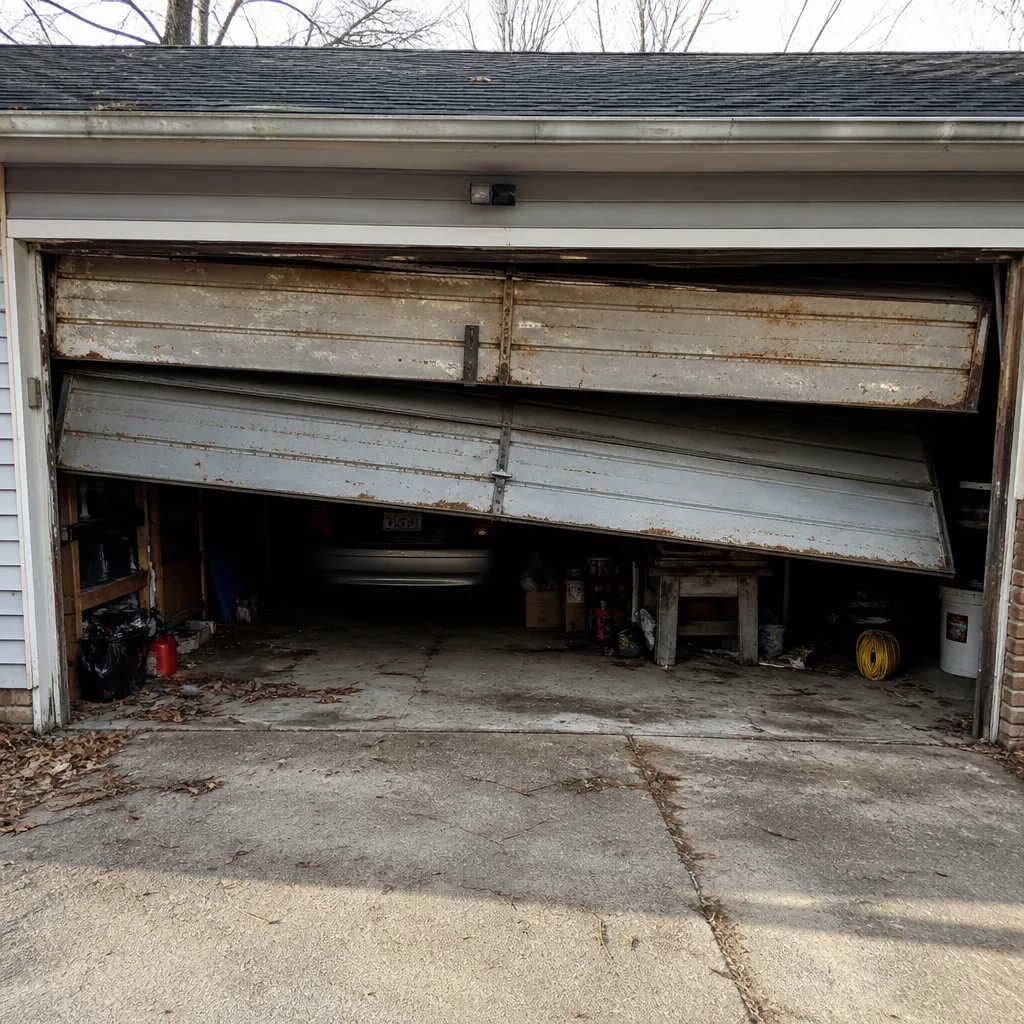 Before
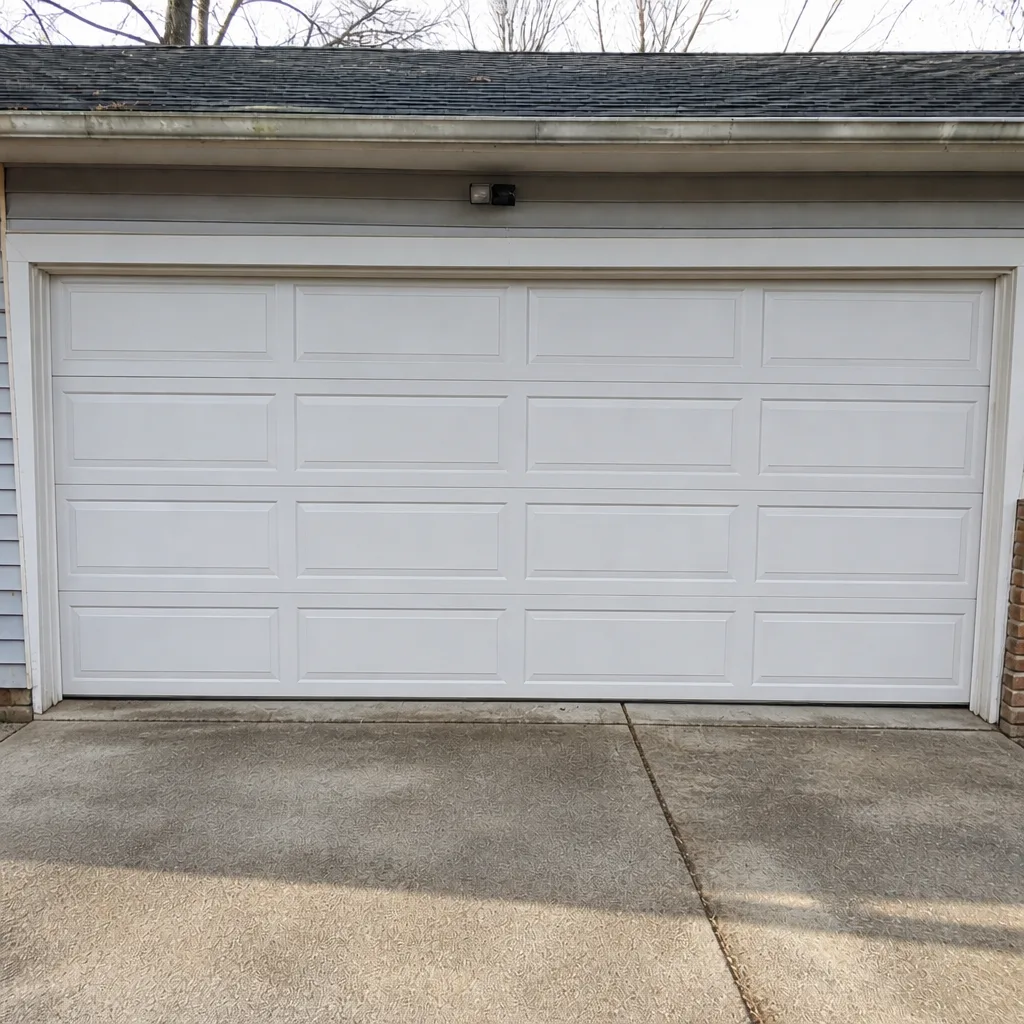 After
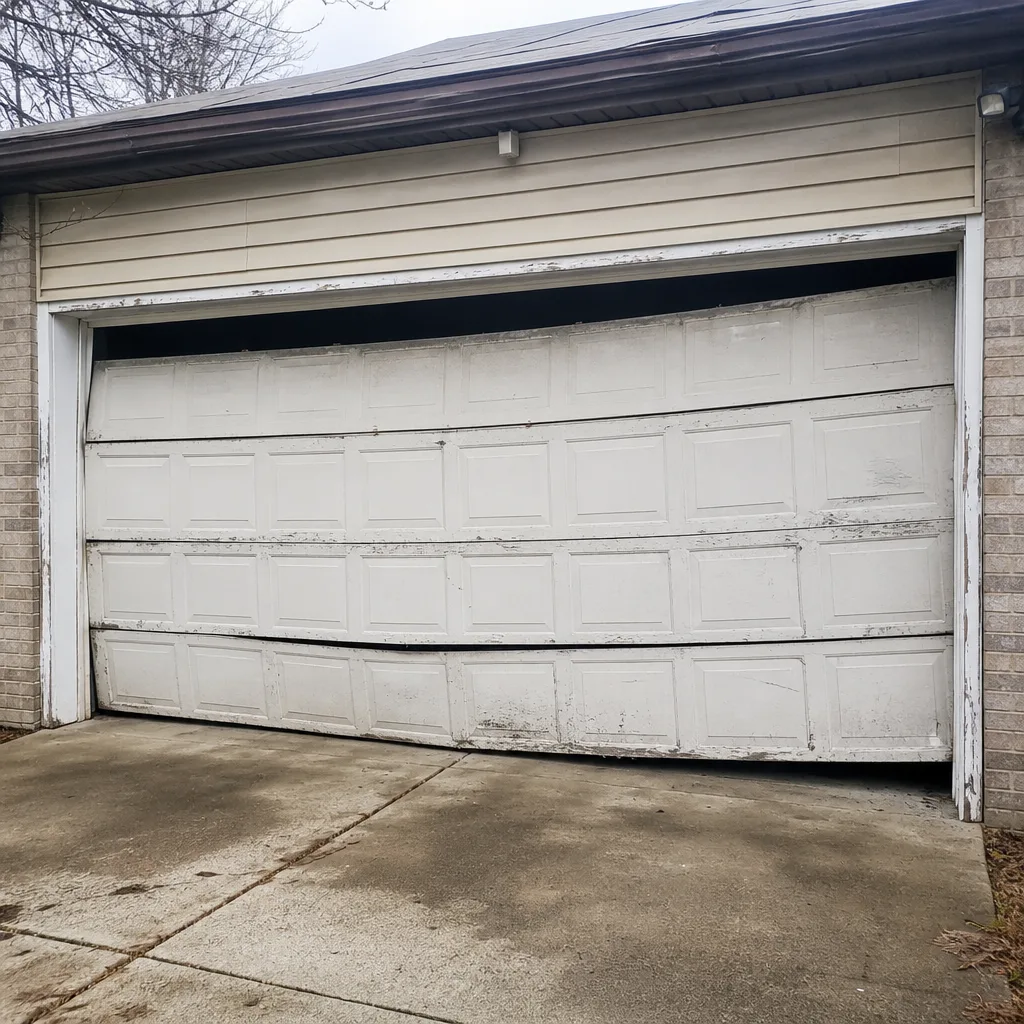 Before
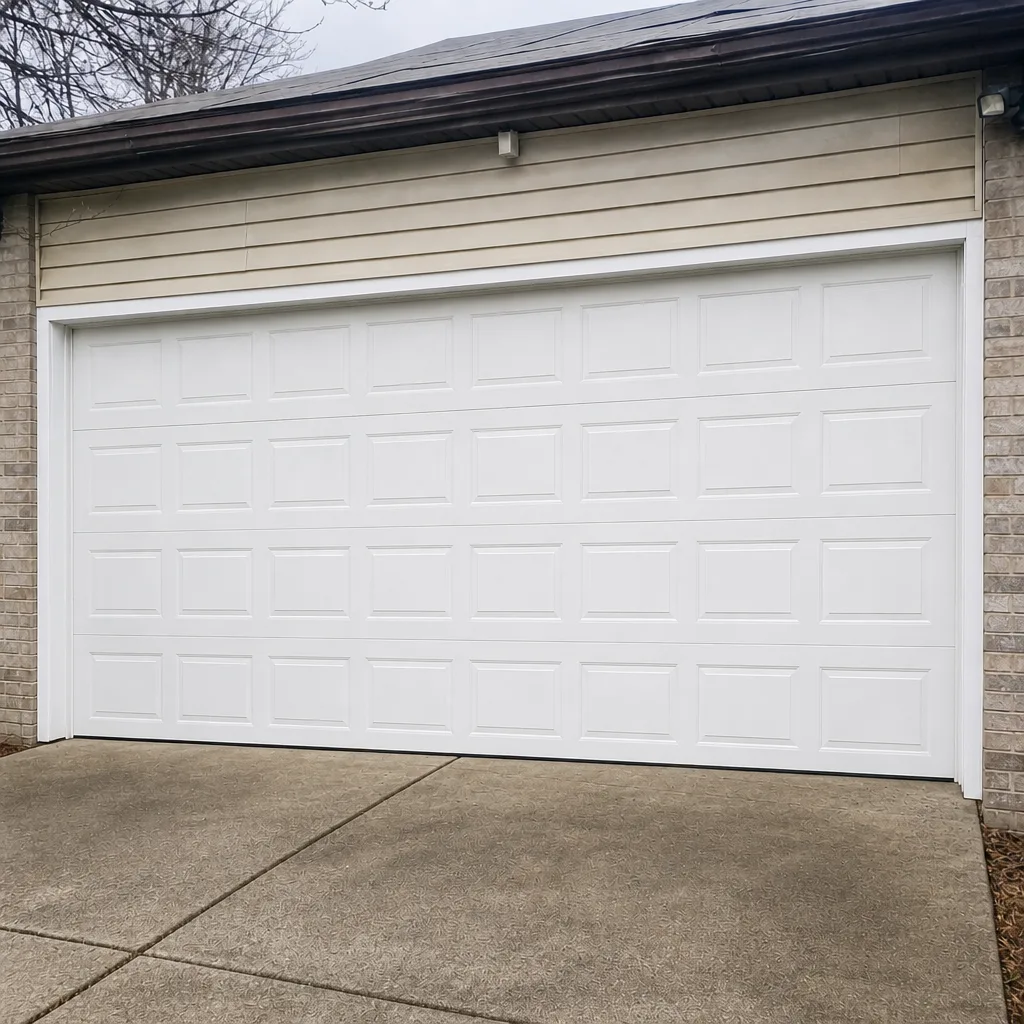 After
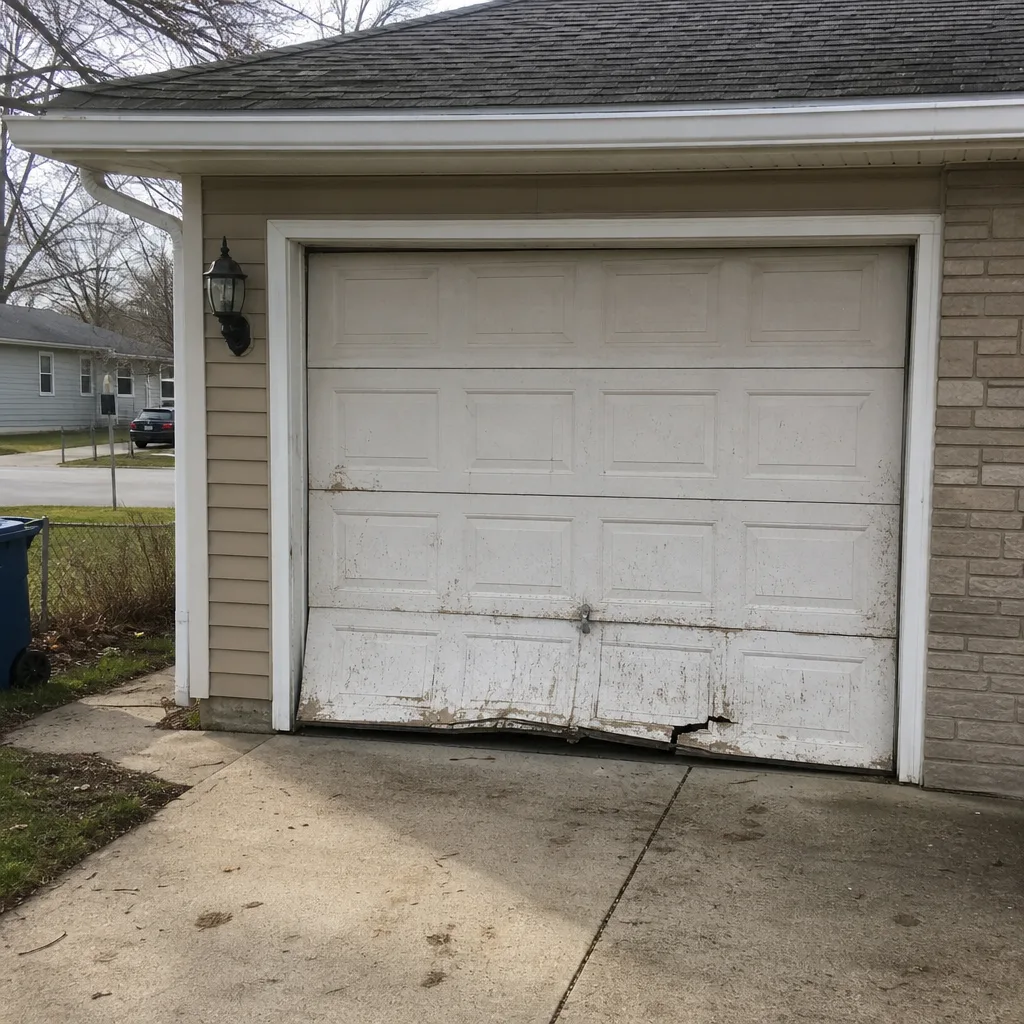 Before
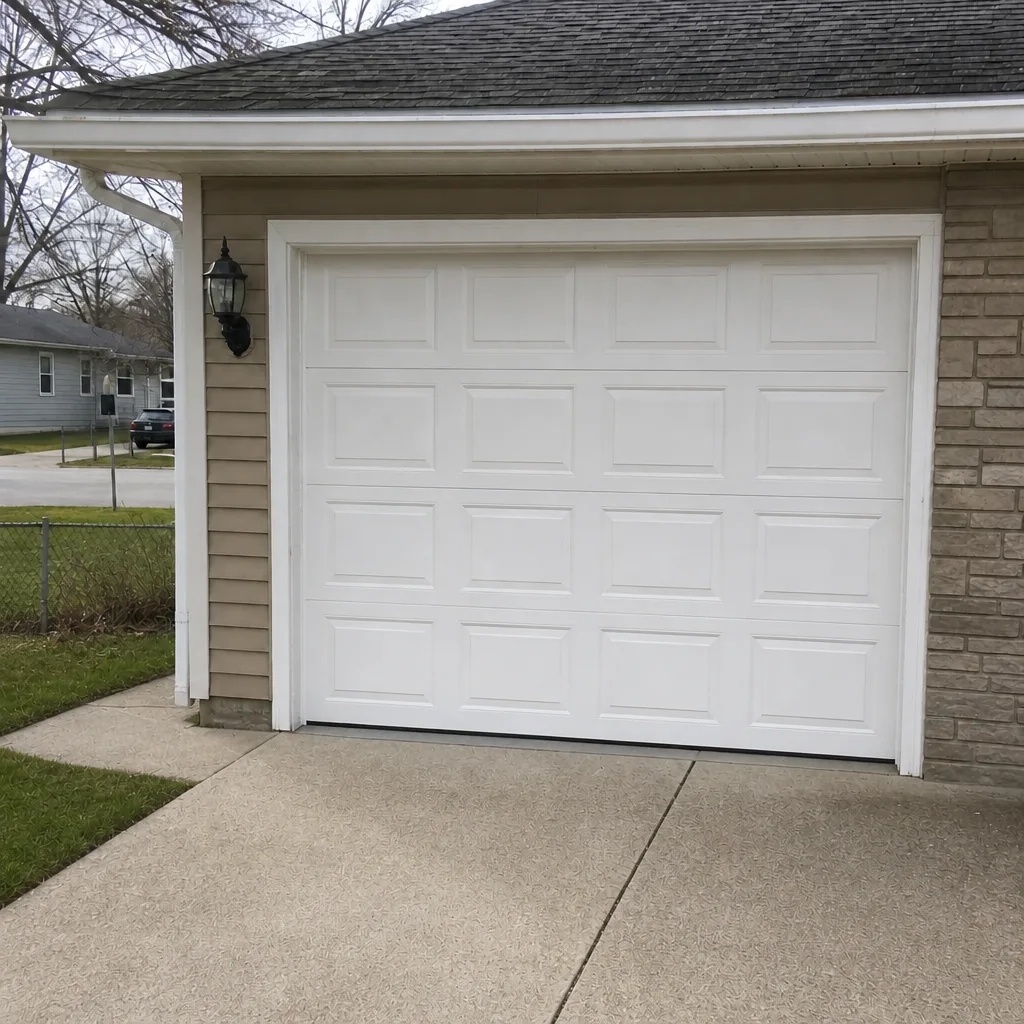 After
When to Call a Professional
Call for any symptom that involves a broken spring, a cable off its drum, a door hanging unevenly, a door that won’t move by hand, or an opener with an electrical smell. Those aren’t projects, they’re safety calls, and forcing through them risks injury or panel damage. Call sooner if your door is stuck open and your home is exposed, or stuck closed when you need to leave. If your door grinds, pops, or reverses intermittently but still functions, book a scheduled visit and describe the pattern you’ve noticed. For repairs, we aim to get someone out same-day where the schedule allows, with fast dispatch from 7am to 7pm and a rapid response time for urgent calls. For full replacement or new door work, plan for a measure and a written estimate rather than a same-day visit. Carmel Garage Door Repair Co offers free estimates in Carmel – call (855) 904-1455.
Frequently Asked Questions
Grinding on the way up but not down usually means the door is binding against resistance during the lift – a worn roller, a misaligned track, or a door panel that’s swelling against the frame. It’s typically a door-side issue, not an opener issue. Run the manual release test to confirm the door moves easily by hand; if it does, the opener is fine and the fix is in the hardware. Call (855) 904-1455 for an exact quote – estimates are free.
Broken spring repairs are the type of call we prioritize for same-day service where the schedule allows, with fast dispatch from 7am to 7pm. If your spring has snapped, don’t operate the door – call us at (855) 904-1455 and describe what you’re seeing. We can usually walk you through the safety steps on the phone while we line up a technician.
Spring repair typically runs $180 to $340 for one torsion spring, and a matched pair runs about double that because the pair is almost always replaced together. The written estimate you get after we assess the door is the final price, and we quote and agree on it before any work starts. Call (855) 904-1455 for an exact quote – estimates are free.
No, once we’ve assessed the door and given you a written estimate, that estimate is the price. We quote and agree on the price before any work starts, and we don’t add charges for the diagnosis or for parts we find we don’t need. If we find something additional once the door is open and running – a worn hinge at the bottom, say – we tell you before we touch it.
If the opener motor runs but the door doesn’t move, it’s almost always the opener itself – a stripped drive gear or a broken trolley carriage, not the door. Pull the manual release cord and try the door by hand. If the door lifts easily, the hardware is fine and the opener is the failure point. Call (855) 904-1455 for an opener repair estimate, which is usually cheaper than a full opener replacement.
We connect you with independent local professionals who are experienced across all the major garage door and opener brands, and who carry the licensing and insurance required in their state. Our technicians have up to 9 years of experience working on the brands already installed in Carmel garages. If you have questions about credentials, ask when you call – we’ll give you a straight answer before booking.
A loud bang followed by a door that won’t lift, a door that drops hard when you release it, a visible gap in the torsion spring, a cable off its drum, or a door hanging off one track – all of these mean stop operating the door until it’s repaired. Forcing the door in any of these conditions risks injury or damages the panels and tracks on top of the original problem. Call immediately; don’t wait to see if it clears up.
The Bottom Line
Garage door problems announce themselves clearly once you know the patterns. A grinding sound on one direction points at hardware. A pop followed by a heavy door points at a spring. An opener that runs but doesn’t move the door is an opener problem. And the manual release test settles most of it in under a minute. Read the symptom, name the pattern, and you’ll skip the vague “it’s broken” call that opens the door to unnecessary sales. When the symptom is a spring, a cable, or a door off its track, call. When it’s a squeak or a remote, it’s not an emergency. For anything in between, our garage door installation team can also help plan a full replacement if that’s where your door ends up heading.
Call Carmel Garage Door Repair Co at (855) 904-1455 for a free estimate. Same-day service is available for repairs, with fast dispatch from 7am to 7pm, and every job comes with an upfront price quoted and agreed before any work starts.
Written by the team at Carmel Garage Door Repair Co.