Last updated November 21, 2026
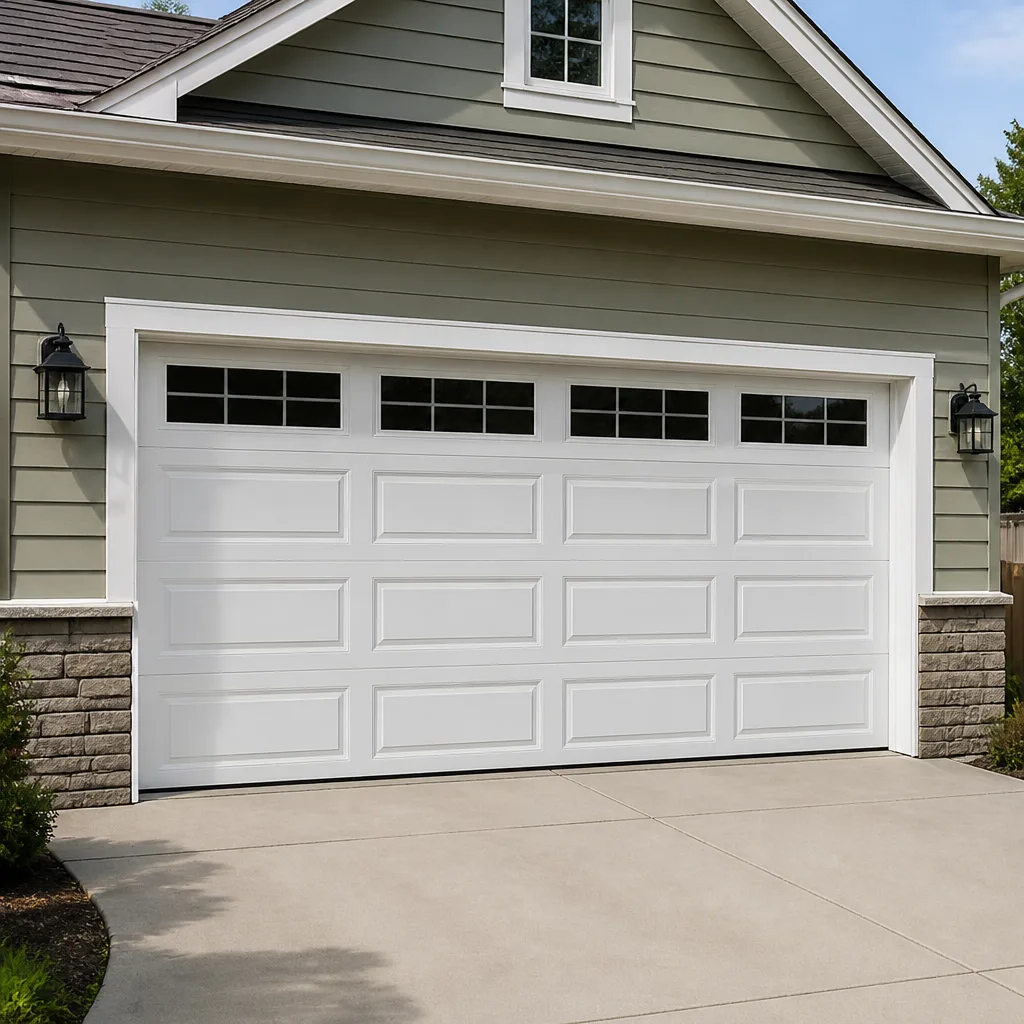 Raised-panel steel
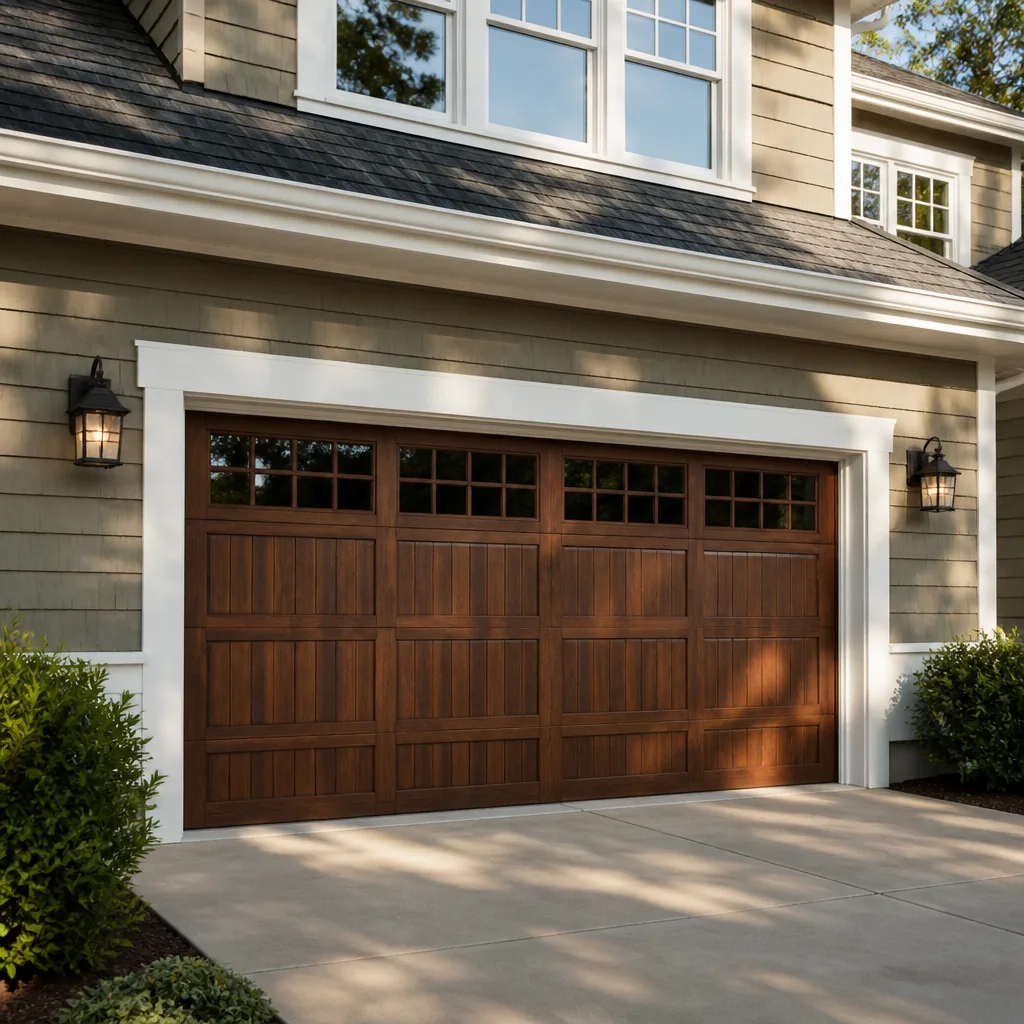
 Carriage house
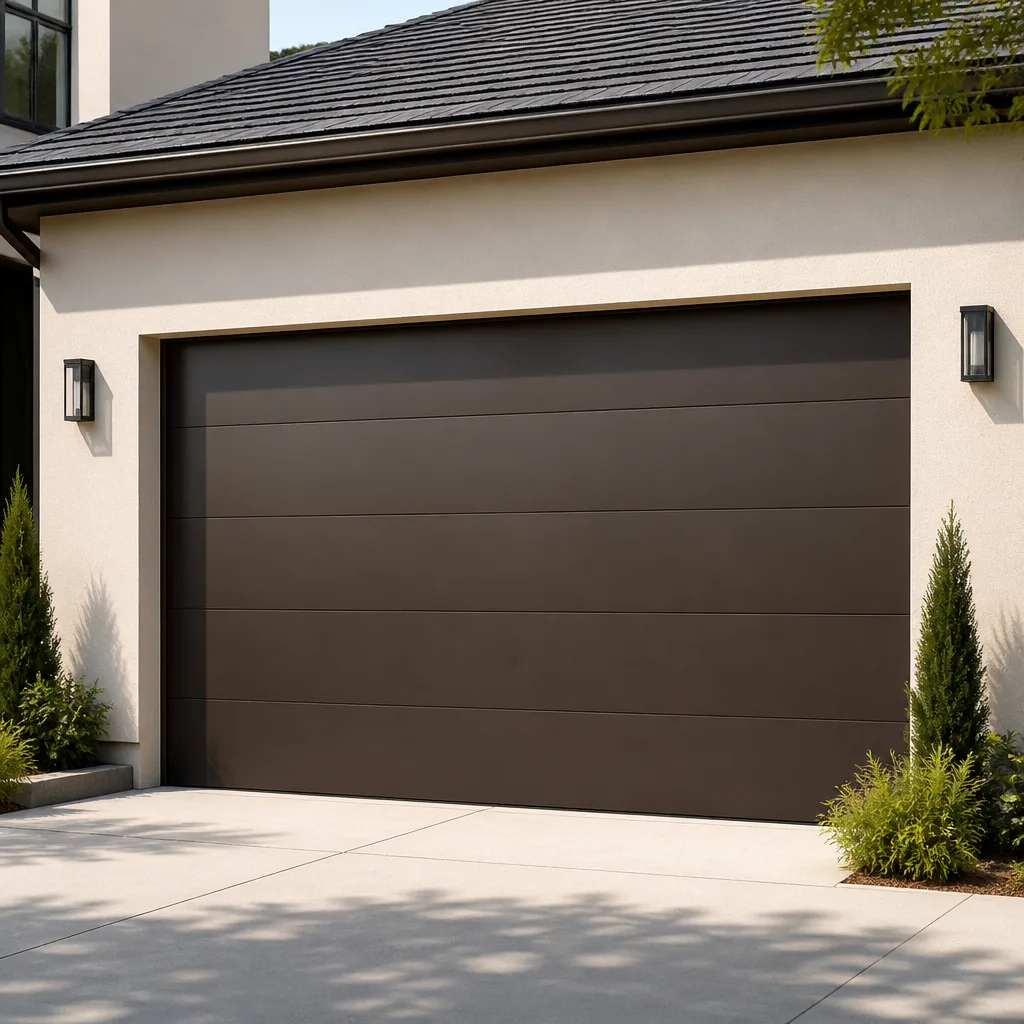 Modern flush
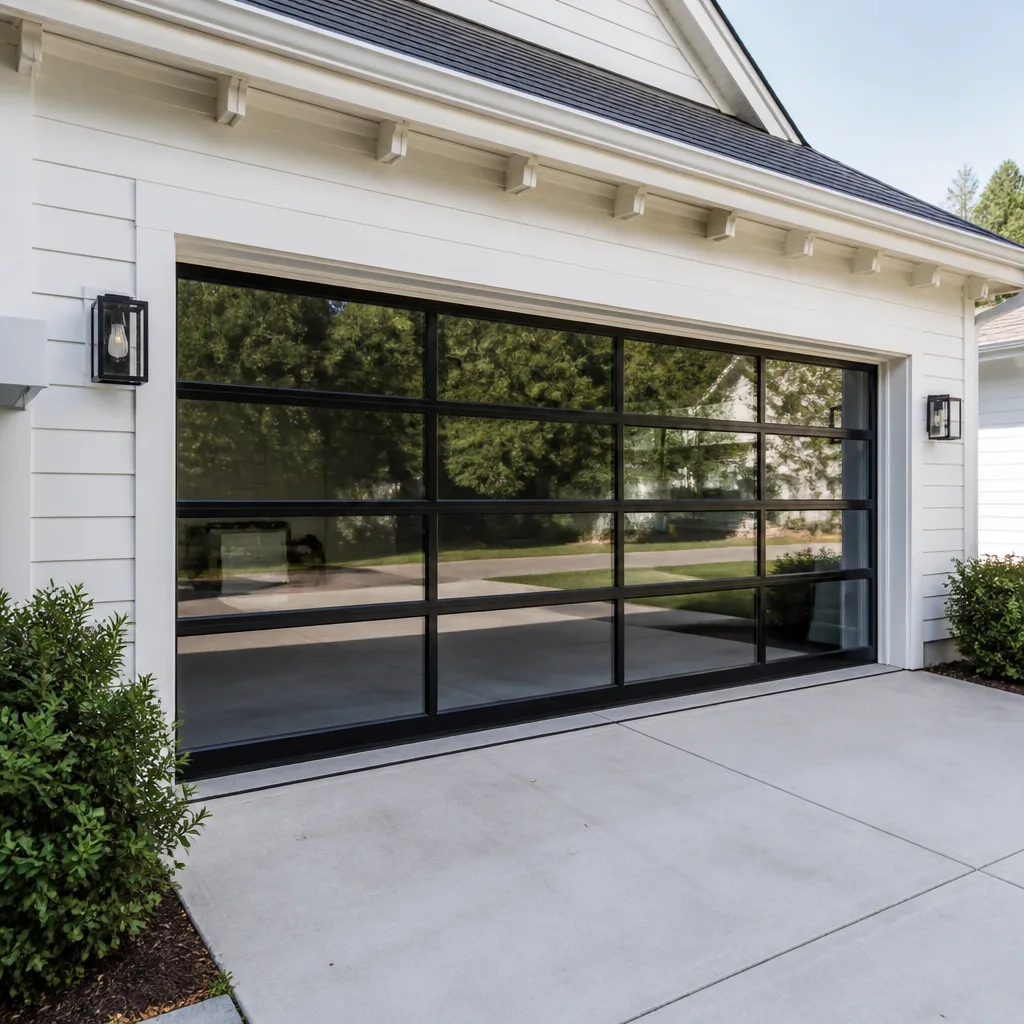 Full-view glass
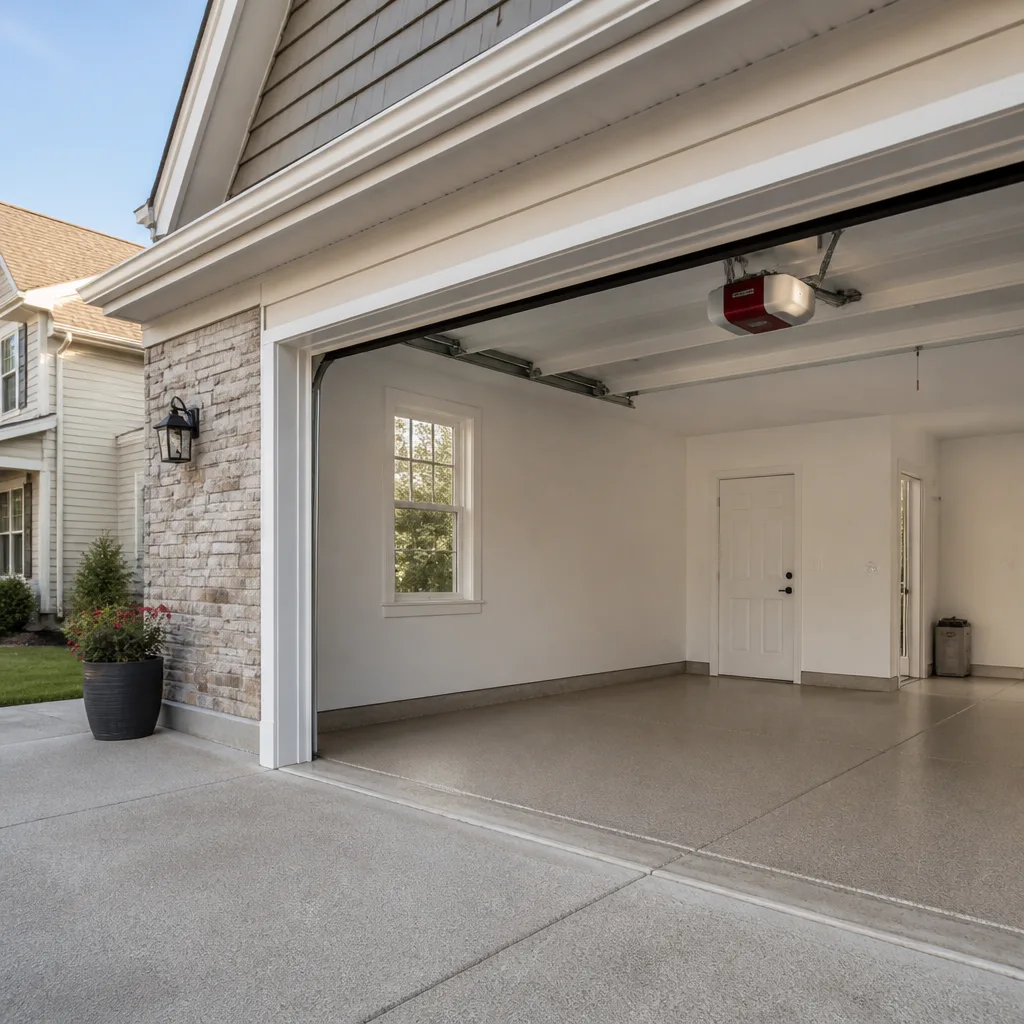 LiftMaster openers
 Chamberlain openers
Full 25-point door and opener safety check with every visit - springs, cables, rollers, tracks, and your LiftMaster or Chamberlain opener included
You get a price before we start. It does not change when the pro arrives.
Get your free estimateGarage Door Repair Maintenance Schedule: What to Do and When
Lubricating your torsion springs in July is largely wasted effort. By the time the cold settles in, that oil has collected grit and thinned out, and the metal is heading into Carmel’s freeze-thaw season without a real protective film. The window that actually matters is late September, before the first hard frost. A garage door doesn’t need monthly fussing. It needs the right tasks at the right intervals, timed to how Indiana weather stresses springs, cables, rollers, and openers across the year. In this guide, we’ll walk you through a month-by-month calendar built for Carmel homes, the exact lubricants each component needs, how to run a balance test that tells you a spring is tiring, opener intervals by drive type, and what to log so a technician can spot a trend before it becomes a breakdown.
Quick Answer
A garage door maintenance schedule for Carmel homeowners breaks into four seasonal passes: a light spring check in March, a roller and alignment inspection in June, the important pre-winter service in late September, and a cold-weather hardware check in December. Most components need attention once or twice a year, not monthly. The two tasks that matter most are lubricating moving metal parts before freeze-thaw sets in and running an annual balance test to catch a worn spring before it snaps.
Styles & brands we work with
- Raised-panel steel
- Carriage house
- Modern flush
- Full-view glass
- LiftMaster openers
- Chamberlain openers
Table of Contents
- Why Timing Beats Frequency in Carmel’s Climate
- The Month-by-Month Maintenance Calendar
- The Right Lubricant for Each Component
- The Annual Balance Test and What the Numbers Mean
- Opener Maintenance Intervals by Drive Type
- What to Log After Every Maintenance Pass
- Common Mistakes to Avoid
- When to Call a Professional
Why Timing Beats Frequency in Carmel’s Climate
Carmel sits in central Indiana, where the garage door experiences real seasonal swings: humid summers that push openers hard, sharp fall temperature drops, deep winter freezes, and a spring thaw that works moisture into every seam and joint. Metal expands and contracts through those cycles. Grease that flowed freely in August stiffens by January. Weatherstripping that stayed pliable in June turns brittle by February. A schedule written for a mild national average misses all of this.
The point isn’t to do more tasks. It’s to do them when the door is about to face its hardest conditions. Lubricating rollers in the middle of summer feels productive but the oil thins and migrates before it does much good. Doing the same job in late September means the film stays put through the cold months when friction matters most.
Homeowners in Carmel often ask us whether a monthly inspection is necessary. In our experience it isn’t. Two to four well-timed passes a year catch almost everything, provided you’re looking at the right parts and logging what you see. Here’s how we frame the seasons:
- Spring (March to early April): post-thaw inspection after the freeze-thaw cycle has stressed cables, springs, and hinges.
- Early summer (June): roller, track alignment, and a light lubrication top-off heading into the humid stretch.
- Late September to October: the most important pass of the year. Full lubrication, weatherstrip check, and pre-winter hardware tightening.
- December: a quick cold-weather check for stiff hardware, opener strain, and any ice buildup at the threshold.
If your door is older or has been through a rough season, or if you’re noticing new noises, a professional garage door repair visit is worth scheduling before the calendar says so. Maintenance catches wear. Repair addresses it.
The Month-by-Month Maintenance Calendar
Here’s how the schedule plays out over a Carmel year. Some months you’ll do almost nothing. Others carry real weight. That imbalance is the point.
January and February: watch, don’t work
Coldest stretch. Listen for grinding or popping during the first few inches of travel. Check for ice and snow packed at the bottom seal. Clear it gently. Don’t force a frozen door. If the opener strains or reverses on its own, stop cycling it and get help.
March: post-thaw inspection
As temperatures climb, freeze-thaw moisture releases. This is the time to walk the door through a full open-close cycle and watch the cables, hinges, and spring coils. Look for rust bloom at the bottom bracket. Check for slack or visible fraying on the cables. Note any change in sound.
April and May: alignment check
Rollers, tracks, and hinges take a season of humidity. Sight down each track to spot bends. Check the gap between the door and the jamb from the inside. Anything asymmetric here usually traces back to a roller or a loosened bracket.
June: summer opener heat test
Openers run hotter in humid weather, especially on a south- or west-facing garage. Cycle the door ten times in a row on a warm afternoon and listen. Chain- and screw-drive openers will sound rougher when they’re struggling. If the opener housing feels hot to the touch after a few cycles, note it. We repair openers across the major brands, including garage door opener repair for Genie and Craftsman units that often need a capacitor or gear replacement around this time. LiftMaster and Chamberlain belt-drive units tend to hold up better, but the belt tension still needs checking.
July and August: light touch only
Nothing heavy. If the door feels sluggish or new noise shows up, log it. Don’t add lubricant in the heat; the film migrates. This is the month to note trends, not fix them.
Late September to October: the pre-winter pass
This is the one that matters. Before the first freeze:
- Apply silicon spray to springs, hinges, and the torsion bar bearings.
- Apply white lithium grease to the roller stems (not the wheels themselves).
- Treat weatherstripping with a silicon spray made for rubber, not grease.
- Tighten all hinge, bracket, and track bolts. Cold metal will find any loose fastener.
- Run a full balance test (see below).
- Test the opener’s auto-reverse feature with a small block.
November and December: cold-weather check
One quick pass. Listen for grinding, check that the weatherstrip sits snug at the floor, and confirm the opener safety sensors are clean and aligned. If the door surges or hesitates at the bottom, that’s a sign a spring is losing tension in the cold. Get it looked at.
The Right Lubricant for Each Component
Lithium grease and silicone spray are not interchangeable, and using the wrong one is one of the most common maintenance mistakes we see in Carmel garages. Each product solves a different problem. Getting it right extends component life; getting it wrong can attract grit, gum up rollers, or leave rubber weatherstripping sticky and prone to cracking.
Here’s the breakdown we give homeowners:
- Rollers (the stems): white lithium grease. A small dab on each stem where it meets the hinge. Never spray grease on the wheel itself; it will attract debris and cause flat spots.
- Springs, hinges, and torsion bar bearings: silicon spray or a dedicated garage door lubricant. These parts move slowly and under high tension. A light silicon film is what you want, not a heavy paste.
- Weatherstripping (bottom seal and side seals): silicon spray only, made for rubber. Lithium grease degrades the rubber over time and leaves it sticky in summer heat.
- Tracks: nothing. Never lubricate a track. Grease collects grit and causes sticking. Wipe tracks clean with a dry cloth.
- Hinges (metal-on-metal contact points): a small drop of light machine oil on the pivot, wiped clean after. Don’t overdo it.
One more rule: don’t mix brands or types between passes without wiping the component first. Lithium grease applied over silicone spray, or the reverse, can produce a gummy layer that does more harm than good. If you’ve been applying the wrong product for a couple of seasons, a technician will often find the residue on the first visit; it’s an easy thing to correct. Our technicians have up to 9 years of experience and know exactly which lubricant each part needs, from a Clopay steel door’s hinges to the torsion system on an Amarr sectional.
The Annual Balance Test and What the Numbers Mean
The annual balance test tells you whether your springs are still doing their job. A spring nearing end-of-life shows it here before it fails, and on a standard 7-foot door the numbers tell you how close you are. This is the single most useful thing you can do once a year without special tools.
Here’s the procedure. Never perform this on a door whose spring is already broken, and never try to adjust or remove a spring yourself. Torsion springs are under extreme tension and have caused serious injury in untrained hands. If the door feels wrong at any point, stop and call a professional.
- With the door closed, pull the manual release cord on the opener trolley. You need the door disconnected from the opener to test it freely.
- Lift the door by hand to about waist height and let go.
- Note what happens:
- Door stays put: springs are balanced. Well done.
- Door drifts up a few inches: springs are slightly over-tensioned. Not urgent, but worth noting.
- Door drifts down and doesn’t hold: springs are losing tension. This is the warning sign of a worn spring.
- Door takes serious effort to lift: springs are significantly under-tensioned or one of a pair has failed. Get this checked immediately; the door or opener is compensating for a job it wasn’t designed to do.
On a standard 7-foot door with a matched spring pair, the target is roughly neutral: the door stays where you put it. If you retest six months later and the drift has gotten worse, you’re watching a spring age. That’s exactly the kind of trend a technician wants to see logged. It’s also why we always recommend replacing a matched pair together rather than one at a time. If one spring of a pair has weakened, the other isn’t far behind. A single spring is typically quoted one figure and a matched pair roughly double; the two are quoted separately, not as one range. Call (855) 904-1455 for an exact quote on a pair, free estimate.
Opener Maintenance Intervals by Drive Type
Not all openers wear the same way. A belt-drive unit and a chain-drive unit running in the same Carmel garage need attention on different schedules, and knowing which one you have changes what you should check and when. We work on all four main drive types and see the differences clearly.
Belt-drive (LiftMaster, Chamberlain)
Quietest and longest-lived. Belt tension should be checked twice a year; too tight and the belt strains the motor, too loose and it slips. Cycle-count benchmark: after roughly 1,500 to 2,000 cycles (a full year of typical use is usually 1,000 to 1,500 cycles), check belt condition and wipe it clean of dust. Belt-drive units don’t need lubrication on the belt itself.
Chain-drive (Craftsman, LiftMaster)
Louder and more maintenance-prone. The chain should get a light, dry-film lubricant twice a year, not oil, which attracts dust. Chain tension needs a check every 1,000 cycles. If you hear rattling, the chain is probably slack. This is the most common opener repair we get asked about, and it’s usually fast to fix.
Screw-drive (Genie, some Chamberlain models)
Screw-drive units need the drive screw greased on a schedule, usually twice a year, with the grease that came with the opener or a compatible alternative. Skip it and the carriage grinds. Genie screw-drive systems in particular are sensitive to missed lubrication, so don’t let this slip.
Jackshaft (wall-mount, often on Wayne Dalton doors with high-lift tracks)
Wall-mount openers run at higher cycle counts on doors with tight ceiling clearances. Check the drive belt or chain every six months regardless of cycle count. The manual release mechanism should be tested quarterly to be sure it engages cleanly – if you ever need to disconnect the door quickly, you want to know it works.
Across all drive types, the opener’s safety sensors should be tested monthly (a quick wave of a hand in front of each sensor tells you whether the door reverses). Most openers from the brands above log the number of cycles on the wall control or the manual’s diagnostic menu. If yours doesn’t, a phone-based cycle counter works too. Either way, know your baseline so you can spot the point your unit is being worked harder than usual. If the opener is straining beyond its rating because the door’s springs are failing, that’s a garage door repair situation before it’s an opener problem.
What to Log After Every Maintenance Pass
A maintenance log turns your routine from a to-do list into a record a technician can actually read. When you call for a service visit, the first thing we want to see is what’s changed since the last check. Without a log, everything you’ve noticed over the past year collapses into “it started acting up.” With one, we can trace the drift and get to the right fix on the first visit instead of the second.
Keep it simple. A page in a notebook or a note on your phone is enough. Log these after each pass:
- Date and cycle count. Pull the cycle counter reading from the opener if it has one. If not, note the approximate number of times the door was used that season.
- Balance test result. Door stayed put, drifted up, drifted down, or hard to lift. Add a note if the drift changed since the last test.
- Sound changes. Any new grinding, popping, squeaking, or hesitation. Describe when it happens (on open, on close, mid-travel, at the bottom).
- Visual condition of springs and cables. Rust spots, fraying, gaps in the spring coils. Just note what you see.
- Lubricant applied and where. Which product went on which part. Prevents mixing grease types.
- Opener behavior. Any hesitation, strain, or temperature-related difference (e.g., “sluggish on cold mornings”).
- Weatherstrip condition. Cracks, tears, or bottom seal sitting unevenly.
Three or four entries a year is plenty. Bring the log to any service call in Carmel. A technician who can see trends in your notes can diagnose a spring that’s been slowly weakening over two seasons versus one that failed suddenly last week, and that difference matters for the repair.
Common Mistakes to Avoid
We see the same handful of mistakes repeat across Carmel garages. Each of them causes more wear than a missed maintenance pass does.
- Lubricating springs in July. The film thins in summer heat and attracts grit. Late September is the real window, before freeze-thaw season starts stressing metal.
- Greasing the tracks. Grease on a roller track collects grit and causes sticking. Tracks should run dry; only the rollers’ stems get grease.
- Applying white lithium grease to the weatherstripping. Wrong product. Use silicon spray made for rubber or the seal will stiffen and crack through the first cold snap.
- Replacing one spring of a matched pair. When one spring fails, the other has usually been under extra load and isn’t far behind. A pair is quoted separately from a single, and replacing both at once is the thorough option.
- Adjusting a torsion spring yourself. This is the single most dangerous maintenance task on a garage door. Torsion springs are under extreme tension. Do not attempt to adjust, remove, or replace one; call a trained professional.
- Ignoring the balance test because the door “works fine.” A door can open smoothly and have a spring well past its service window. The balance test is the only way to see the drift before it fails.
- Skipping the monthly safety sensor test. Sensors are cheap and important. A blocked or misaligned sensor can shut the door on something or someone. Aim a hand in front of each sensor once a month and confirm the door reverses.
- Running the door after ice has bound the seal. Forcing a frozen door strains the opener, bends tracks, and can snap a spring. Clear the ice before you cycle.
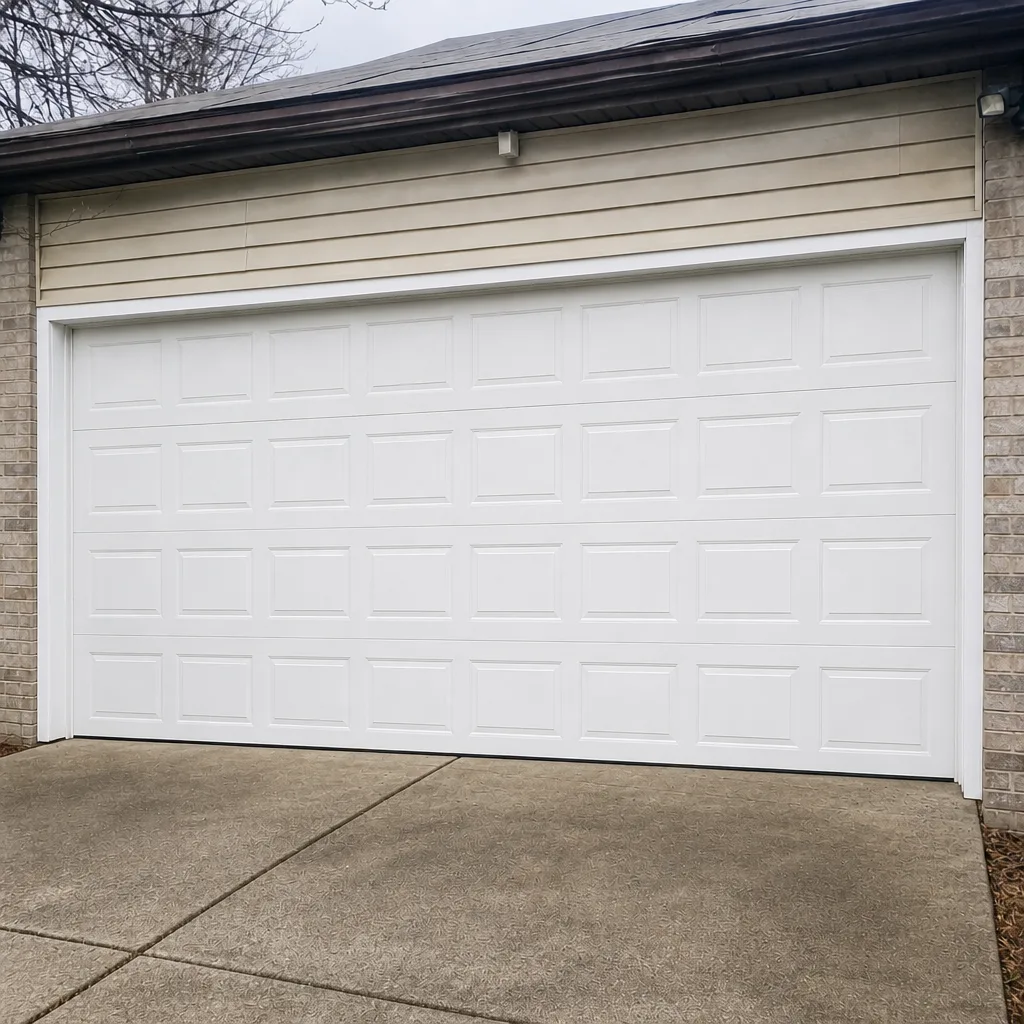
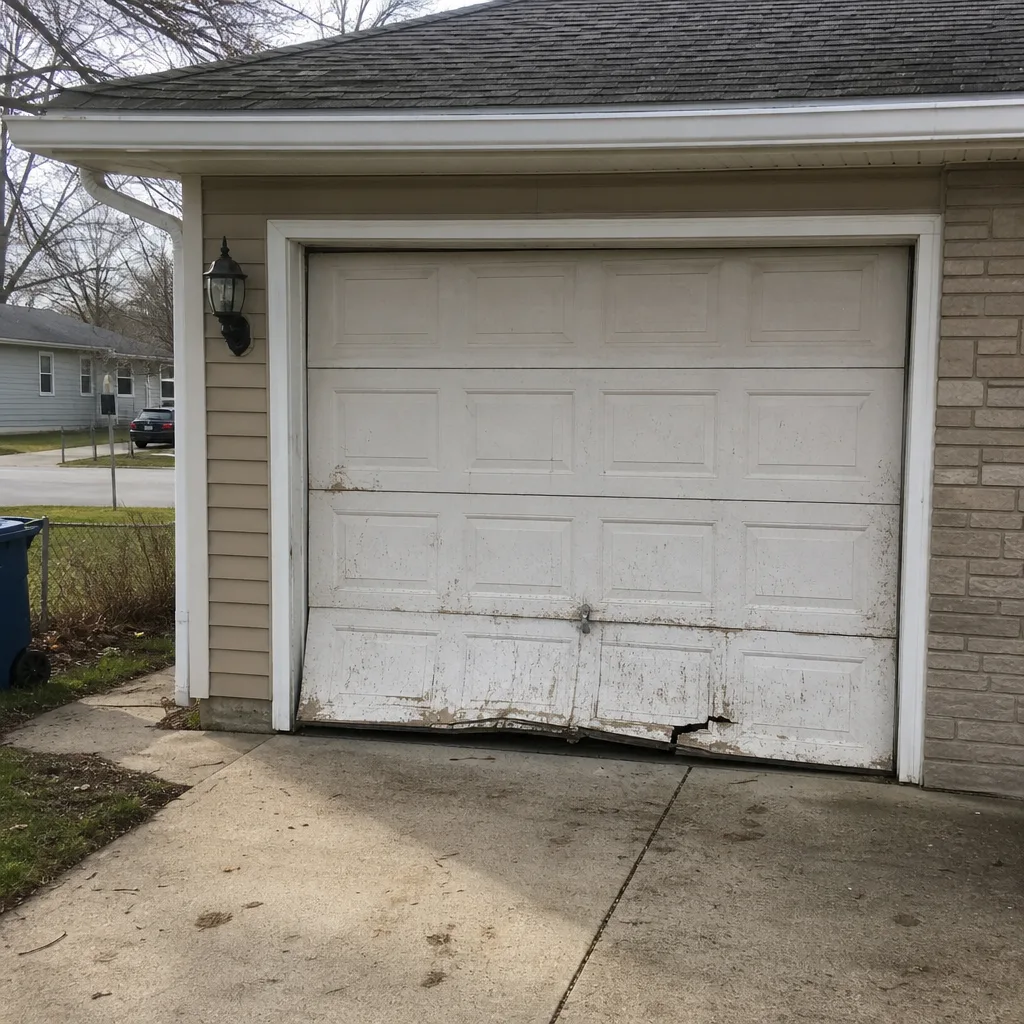
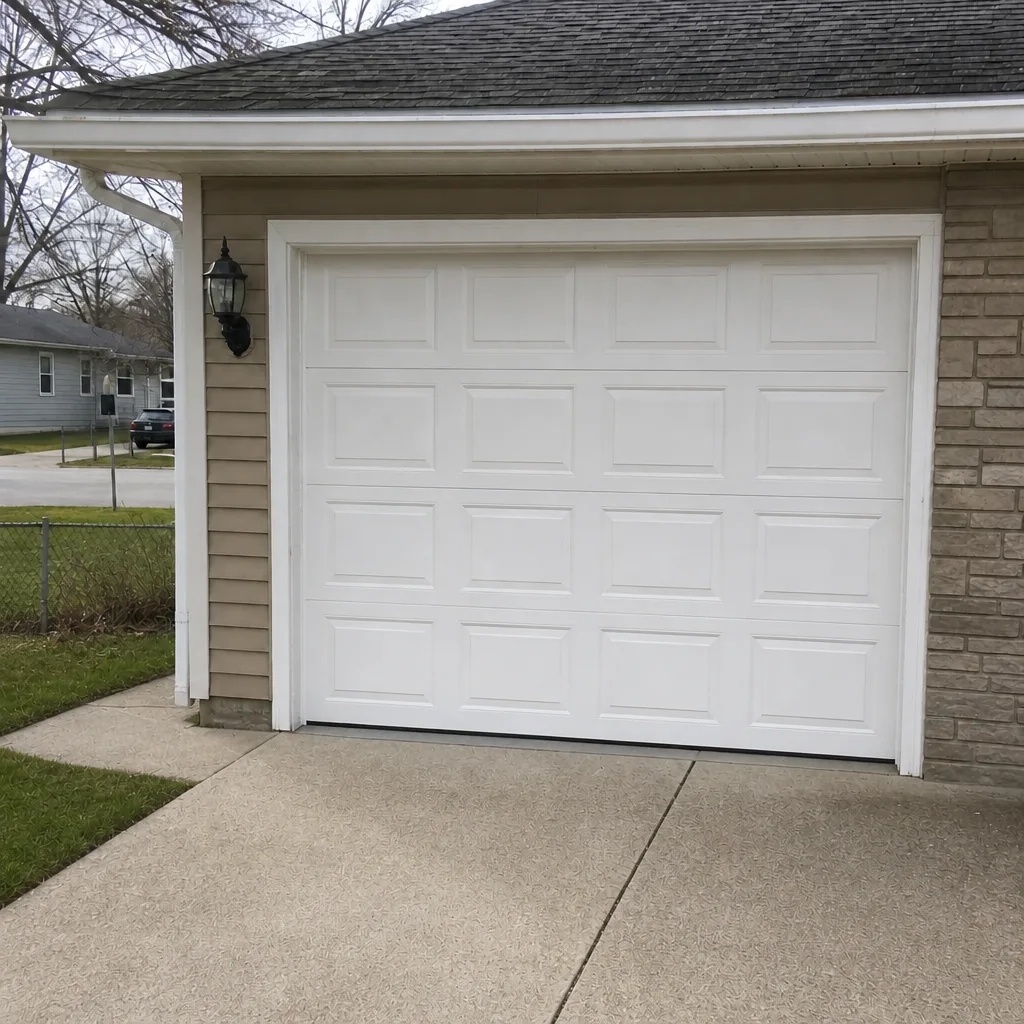
See the difference
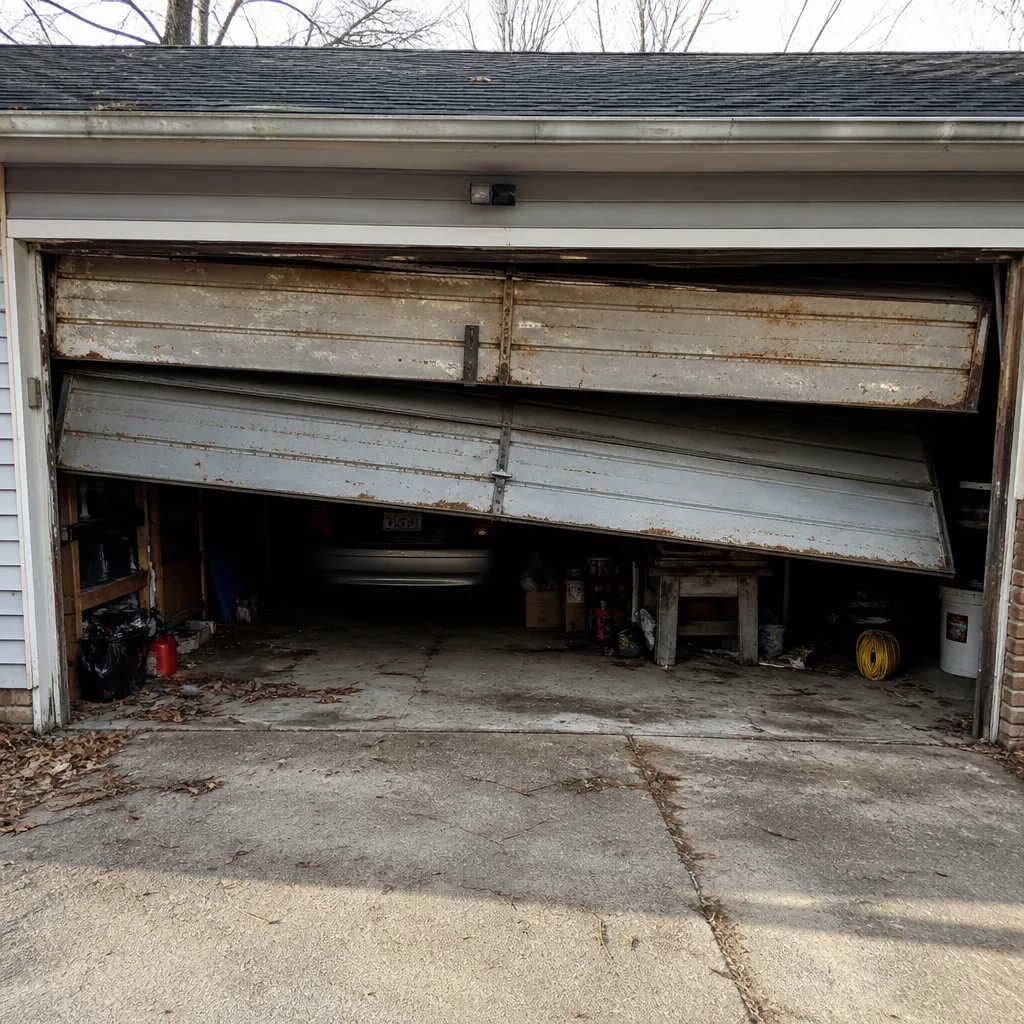 Before
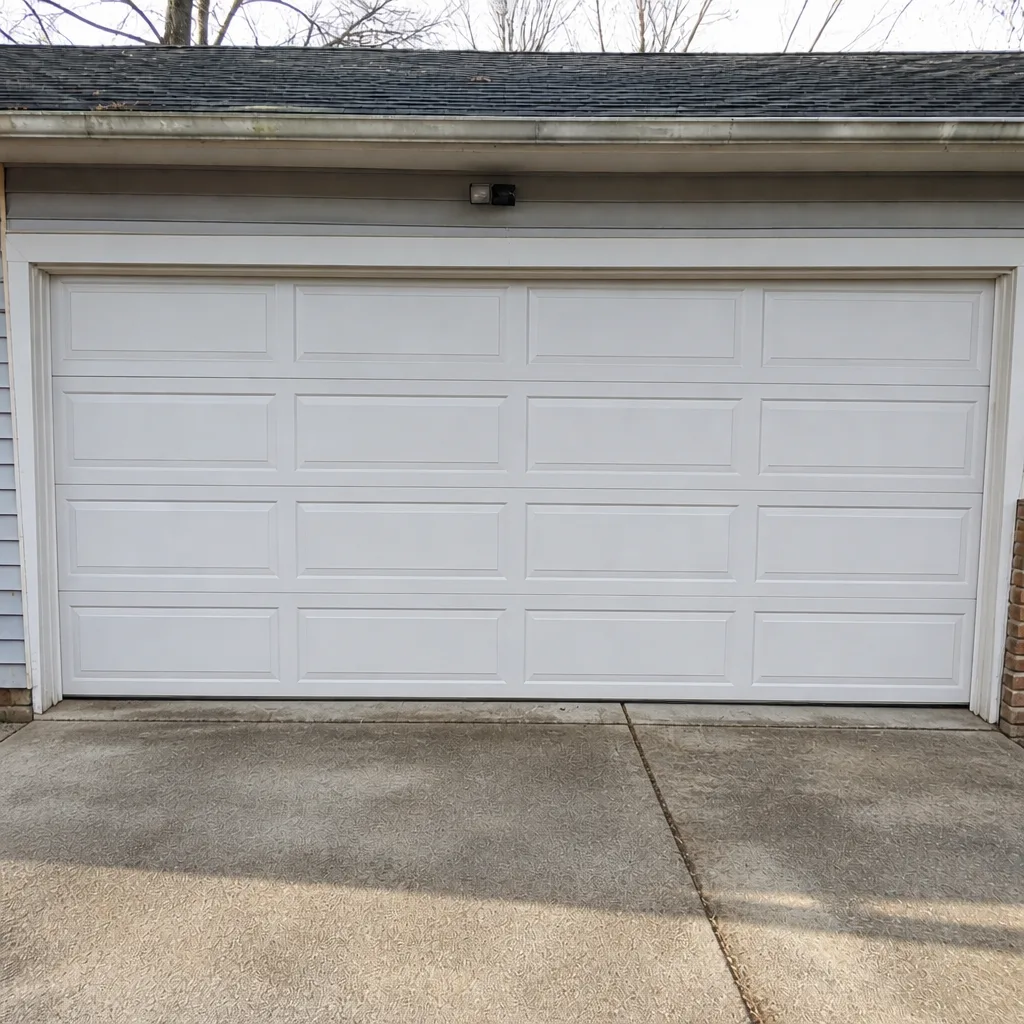 After
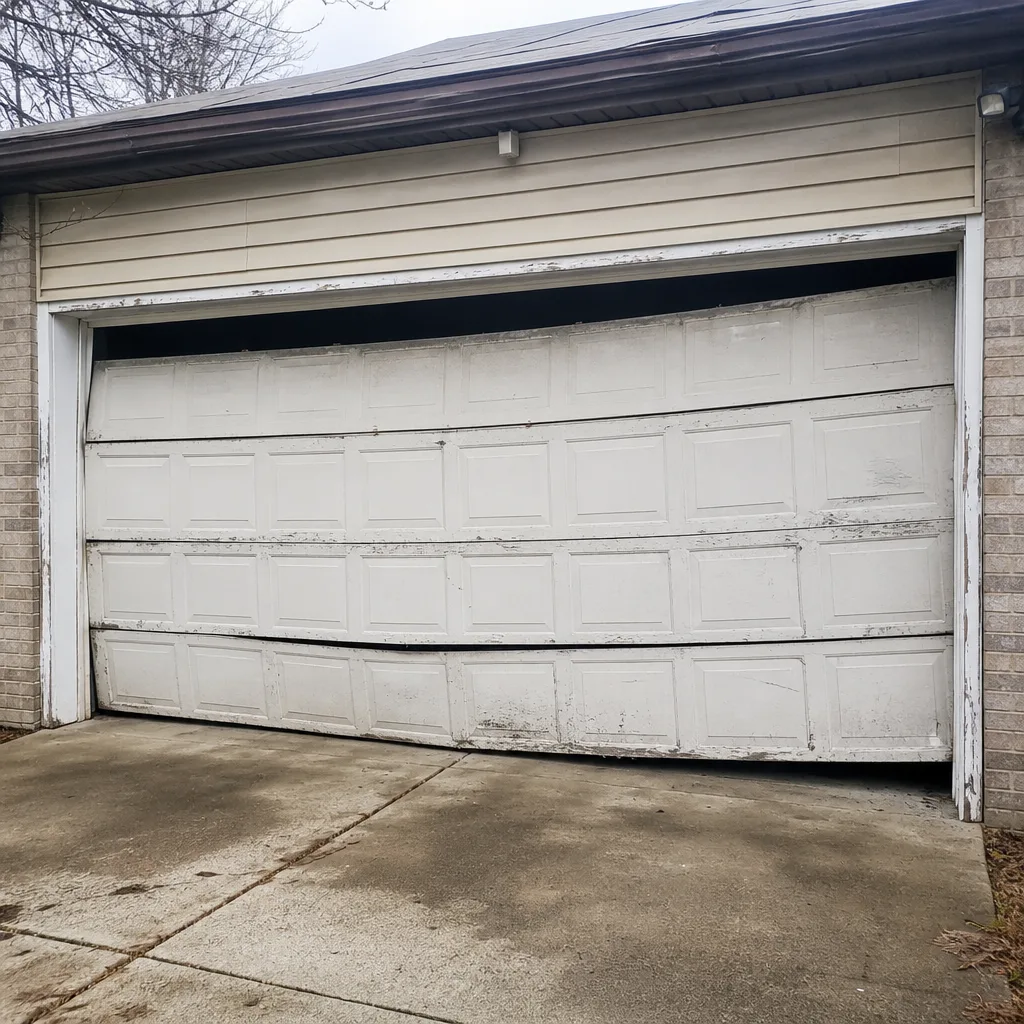 Before
 After
 Before
 After
When to Call a Professional
Most of the annual schedule is homeowner-level work. Three situations call for a trained technician in Carmel: anything involving a torsion spring, cable, or the internal mechanism of an opener, and any repair that follows a spring failure or a door that has come off its track. Spring repair is one of the most technique-sensitive tasks in the trade and the most commonly mishandled. It’s not a DIY job, and our team treats it as its own specialty for that reason. Opener motor failures, gear wear, and capacitor replacements on Genie, LiftMaster, Chamberlain, and Craftsman units are all services we offer, and if the diagnosis points to a new opener rather than a repair, we can handle the swap in the same visit. When the door won’t close at night or won’t open in the morning, emergency service is available; call and we’ll get a technician routed to you.
Carmel Garage Door Repair Co offers free estimates in Carmel: call (855) 904-1455 to schedule. The written estimate is the price, agreed before any work starts. Our technicians have up to 9 years of experience and work on the brand already in your garage, including LiftMaster, Chamberlain, Genie, Clopay, Amarr, Wayne Dalton, Craftsman, and Raynor, so no proprietary-system upsell and no second contractor for the opener or the new door. See Carmel Garage Door Repair Co for our full scope, or plan a full garage door installation when the door itself is past service.
Frequently Asked Questions
Twice a year for most homeowners, with a lighter check in the summer. The important pass is late September or early October, before the freeze-thaw cycle starts stressing springs, cables, and hardware. A spring or fall professional service plus a homeowner-level mid-summer check covers nearly everything. Call (855) 904-1455 for an exact quote on a service visit; estimates are free.
No. Late September is the better window in Carmel. Summer heat thins the lubricating film and attracts grit before freeze-thaw season arrives. Applying silicon spray in the fall, when the door is heading into its hardest conditions, gives the metal the protection it actually needs.
The roller stems, not the wheels. A small dab where each stem meets the hinge keeps the roller pivoting smoothly. Never grease the wheels themselves or the tracks; those collect grit and cause sticking. Weatherstripping should get silicon spray, not lithium grease.
No. Torsion springs are under extreme tension and adjusting, removing, or replacing one has caused serious injury in untrained hands. Stop at the balance test and call a technician. If the door drifts down or is hard to lift, that’s a warning sign a spring is near the end of its service window and worth a proper inspection. Call (855) 904-1455 for an exact quote; estimates are free.
Run the balance test. Disconnect the opener with the manual release and lift the door by hand. If the door drifts down or is hard to lift, the springs are losing tension, and the opener is being forced to compensate. If the springs pass the balance test but the opener still strains, hesitates, or reverses on its own, the opener needs service. Either way, the diagnosis belongs with a technician.
No. The written estimate we give you is the price, and it’s agreed before any work begins. We inspect the door, quote the exact cost for the specific repair or service, and you approve it before we start. That’s how it works for every job, from a spring replacement to a full new installation.
The Bottom Line
A garage door doesn’t need monthly attention. It needs four well-timed passes a year, driven by how Carmel’s seasons stress the mechanism. The pre-winter pass in late September is the one to prioritize: full lubrication with the right products for each part, bolt tightening, weatherstripping check, and a balance test. Spring thaw, summer heat, and the first cold snap each bring a specific inspection. Log what you see after every pass, know your opener’s cycle count and drive type, and never attempt to adjust a torsion spring yourself. Everything else is manageable. When a spring fails, a cable frays, or the opener gives out, that’s where we come in.
If anything in this schedule points to a problem you’d rather not tackle alone, call Carmel Garage Door Repair Co at (855) 904-1455 for a free estimate. We work on the brand already in your garage, from LiftMaster and Chamberlain openers to Clopay and Amarr doors, and we’ll give you the fix the door actually needs, not the easiest upsell.
Written by the team at Carmel Garage Door Repair Co.